
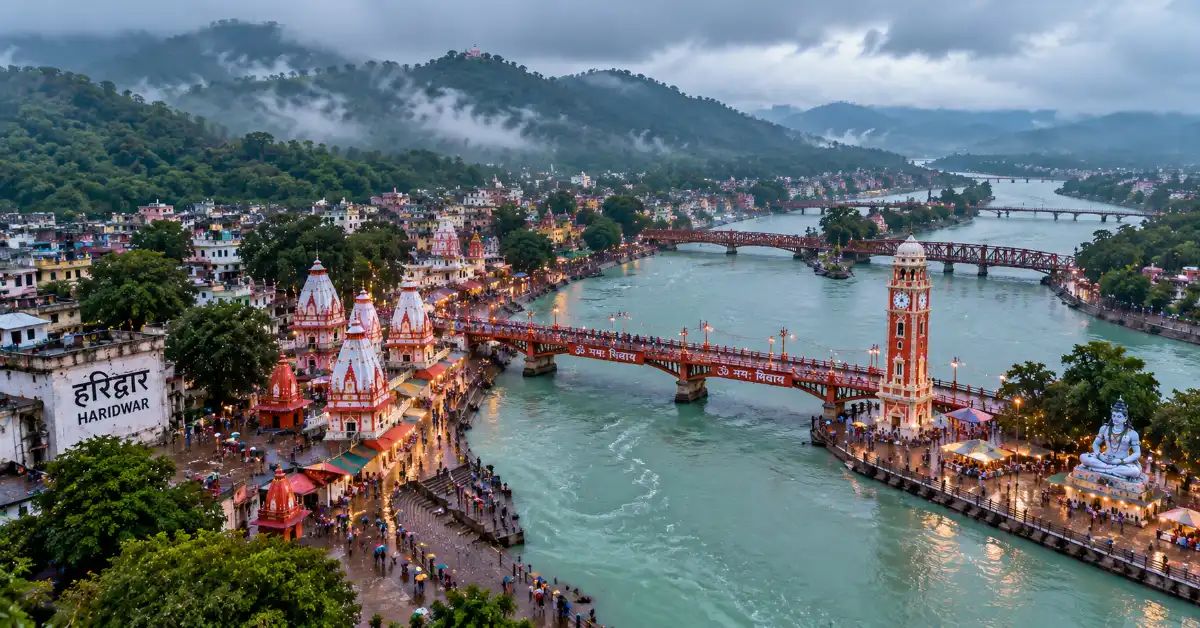
Quick Answer: Haridwar is generally manageable during monsoon if you stay flexible and avoid low-lying ghat areas during heavy rain spells, but the risk is real, not theoretical. The Ganga at Bhimgoda Barrage has a warning mark of 293 metres and a danger mark of 294 metres, and the river has crossed that danger mark in past monsoons, including documented crossings in 2012, 2017, and 2021. As recently as late July 2026, heavy rain pushed the river to within 30 centimetres of the warning level. If your trip depends on calm weather and open ghats, October to March remains the safer choice.
If you’re planning haridwar in monsoon, the honest answer sits between two extremes, it’s not automatically dangerous, but it’s not risk-free either.
How Bad Does the Flooding Actually Get?
Bad enough that authorities track it by the hour, not the day.
At Bhimgoda Barrage, just a kilometre from Har Ki Pauri, engineers watch two specific thresholds: 293 metres is the warning mark, 294 metres is the danger mark. Cross that second number, and low-lying ghats start going underwater.
This isn’t a rare event either. The river crossed the danger mark in 2021, in 2017, and again in 2012, each time triggering high alerts, evacuation of riverside families, and deployment of disaster response teams.
What Happened Most Recently?
In late July 2026, heavy rain pushed the Ganga to 292.70 metres, just 30 centimetres shy of the warning mark and 1.3 metres from danger level. Water discharge at the barrage was measured around 140,000 to 144,000 cusecs.
The river didn’t cross into danger territory that time. But it came close enough that the Uttarakhand government held a high-level review, issued an orange alert, and had public announcements warning villagers to stay away from the banks.
That’s the pattern worth understanding: some monsoon years bring a genuine flood, others bring a tense near-miss. You can’t know in advance which one you’ll get.
Is Monsoon a Good Time for a Haridwar Trip?
Whether is monsoon a good time for haridwar trip planning really depends on what you’re flexible about.
Only if you’re genuinely flexible and not chasing a specific ghat experience.
The upside is real too. Crowds thin out, hotel prices drop, and the surrounding hills turn a shade of green you won’t see the rest of the year. If your plan can bend around a sudden itinerary change, that trade-off might work for you.
But if you specifically want calm access to Har Ki Pauri, a relaxed evening aarti, or day trips into the surrounding hills, monsoon adds a layer of uncertainty that October through March simply doesn’t have.
What Are the Real Haridwar Flood and Water Level Risks?
Three things compound each other during heavy monsoon spells.
First, the river itself rises fast when upstream rainfall in the Garhwal hills is heavy, sometimes within a single day. Second, low-lying areas of the city flood independently from rainwater accumulation, disrupting traffic and movement even before the river crosses any official mark. Third, landslides on the hill roads connecting Haridwar to Rishikesh, Dehradun, and further into the mountains can cut off routes entirely, sometimes for days.
None of these risks are constant through the whole season. They cluster around specific heavy rain spells, often tied to an official weather alert, rather than affecting every single day of monsoon equally.
Haridwar Rainy Season Travel Tips Worth Following
- Check the current IMD alert level for Haridwar and surrounding districts before you travel, not just the general forecast
- Avoid standing close to the ghats or riverbank during and immediately after heavy rain, even if the water looks calm
- Keep your itinerary loosely planned, since road closures from landslides can appear with little warning
- If local authorities or police announce evacuation advisories near the river, treat them as non-negotiable, not optional
- Book accommodation slightly away from the immediate riverside if you’re visiting during peak monsoon months
- Follow official Uttarakhand disaster management updates rather than relying solely on word of mouth
Should You Cancel a Trip Over a Monsoon Forecast?
Not automatically, but check specifically before you finalize travel.
A routine monsoon forecast with moderate rain is very different from an active orange or red alert with flood monitoring posts activated. The first is normal for the season. The second is a genuine reason to postpone, especially if your trip involves the ghats directly or travel through hill roads.
FAQs
Is it safe to visit Haridwar during monsoon season? Generally yes for short, flexible visits away from the immediate riverbank, but real flood risk exists. The Ganga has crossed its official danger mark in past monsoons, so check current alerts before traveling.
What is the Ganga’s danger mark in Haridwar? At Bhimgoda Barrage, the warning mark is 293 metres and the danger mark is 294 metres. The river has crossed this danger mark in past monsoon years, including 2021, 2017, and 2012.
Is monsoon a good time for a Haridwar trip? It suits travelers who want lower crowds and prices and don’t mind rain and flexible plans. It’s not ideal if you specifically want calm ghat access or guaranteed hill-road travel.
What should I do if there’s a flood alert during my Haridwar trip? Follow official Uttarakhand disaster management and local police advisories immediately, avoid the riverbank and low-lying areas, and be prepared to adjust or shorten your trip if authorities recommend it.