
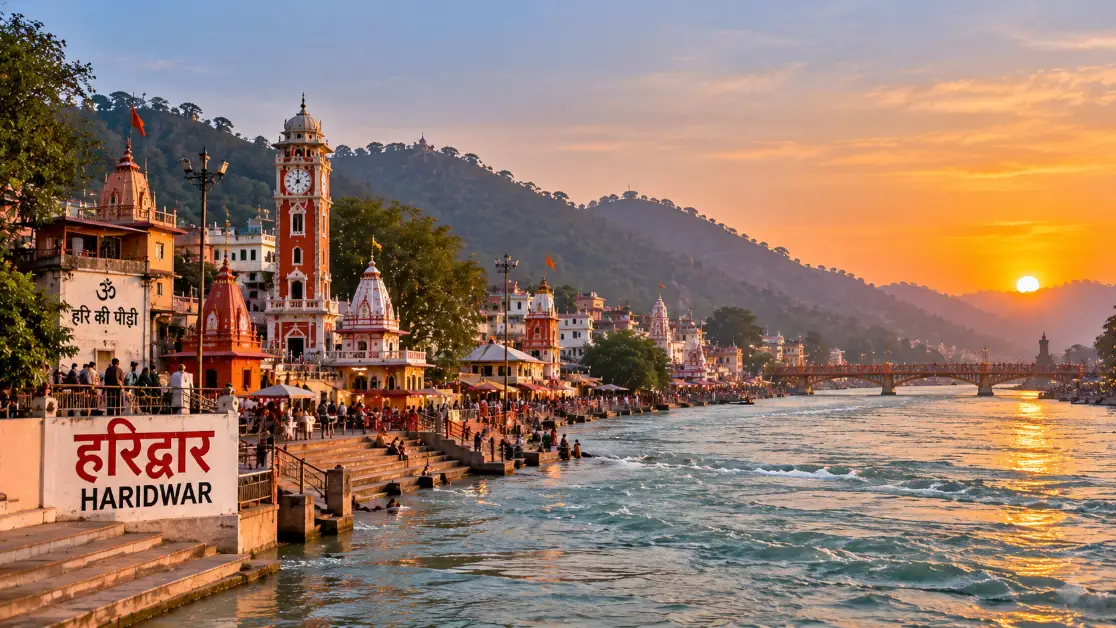
Quick Answer: The best time to visit Haridwar is October to March, when temperatures sit in a comfortable 10°C to 30°C range and skies stay mostly clear. February and October to November are widely considered the sweet spot, warm days, cool nights, no rain. Avoid June through August if you can, peak heat overlaps with heavy monsoon rain and real flooding risk near the ghats.
Haridwar’s weather swings hard across the year. Winter mornings need a jacket. May afternoons can hit 40°C. And the monsoon turns the Ganga into something you watch from a distance rather than wade into.
So the real question isn’t just “when is Haridwar nice.” It’s “nice for what.” A pilgrim chasing a quiet Ganga Aarti wants different weather than a photographer chasing golden-hour fog. Here’s the month-by-month breakdown.
Haridwar Weather by Month
| Month | Day Temp | Night Temp | Feel |
|---|---|---|---|
| January | ~20°C | ~5-7°C | Cold, foggy mornings |
| February | ~23-25°C | ~6-10°C | Pleasant, best season begins |
| March | ~29-32°C | ~15°C | Warm, comfortable |
| April | ~34-35°C | ~20°C | Hot, driest air |
| May | ~36-37°C | ~22°C | Peak heat |
| June | ~36-40°C | ~23°C | Very hot, monsoon builds |
| July | ~32-35°C | ~23°C | Heaviest rain, flooding risk |
| August | ~32-36°C | ~23°C | Humid, heavy rain continues |
| September | ~32-36°C | ~15-21°C | Rain easing, still humid |
| October | ~30°C | ~10°C | Clear skies, cooling fast |
| November | ~25-26°C | ~6°C | Driest month, crisp air |
| December | ~11-22°C | ~2-7°C | Cold again, foggy |
Exact numbers shift a bit depending on which weather source you check. But the shape of the year stays consistent everywhere: cold January, hot May-June, wet July-August, and a genuinely lovely window from October through early December.
Winter (December to February): Cold Mornings, Clear Days
January is Haridwar’s coldest month. Mornings often start around 5°C, sometimes colder, wrapped in the kind of fog that makes the ghats look almost dreamlike.
By afternoon, it warms into the low 20s, so layers matter more than heavy coats. This is when many sources flag February specifically as the start of Haridwar’s best season. Warm days, cold-but-manageable nights, and skies clear enough for good photos at Har Ki Pauri.
Spring into Summer (March to June): Warm, Then Brutal
March is arguably underrated. Days sit around 29-32°C, evenings are pleasant, and it’s before the real heat sets in.
April and May flip that switch fast. Temperatures climb into the mid-30s, and by June, some readings push past 36°C, occasionally touching 40°C on the worst days. Ganga Dussehra typically falls in this window too, adding festival crowds on top of the heat.
If you’re set on visiting during summer, plan sightseeing for early morning or evening, and treat midday as a rest period, not a walking tour.
Monsoon (July to September): Green, Wet, and Genuinely Risky
July is Haridwar’s wettest month by a wide margin, some records show over 350mm of rain in a single month. August isn’t far behind, and it also holds the year’s highest humidity.
This isn’t just uncomfortable weather. Rising river levels near the ghats bring real flooding risk, and this window overlaps with Kanwar Yatra, which brings its own separate crowd disruption on top of the rain. September starts easing off, but the air stays sticky and unpredictable.
Unless you’re specifically drawn to the lush, post-rain greenery, this is the stretch most guides tell you to skip.
Autumn (October to November): The Quiet Favorite
October is where the year turns a corner. Rain fades fast, skies clear up, and days settle into a genuinely comfortable 30°C with cool evenings.
November pushes further. It’s typically the driest month of the entire year, sometimes recording almost no rainfall at all. Mornings turn crisp, days stay mild, and the ghats feel less like a monsoon aftermath and more like the Haridwar most people picture.
When Is Haridwar Actually the Most Crowded
This is where sources genuinely disagree a little, and it’s worth being honest about that. Some tourism data points to May and November as the busiest months overall, while other local guides describe February, October, and November as the “best season” crowds specifically chase.
What’s consistent across almost every source: the haridwar peak tourist season clusters around the cooler months, roughly October through March, with festivals like Kumbh Mela and Kanwar Yatra creating separate, much larger crowd spikes outside the normal seasonal pattern entirely.
If a peaceful trip matters more to you than a lively one, avoid weekends and check the festival calendar before you book, regardless of which month you choose.
What to Pack, Season by Season
Winter mornings genuinely surprise people. A light jacket isn’t optional in December or January, especially near the river where fog sits thick until mid-morning. By afternoon, though, you’ll want to shed layers fast as it warms into the 20s.
Summer packing is simpler in theory, loose cotton, sunscreen, a hat, but the heat still catches people off guard.
If you’re wondering exactly when is the best time to go to haridwar without needing to plan around weather extremes at all, that answer keeps coming back to October-to-March. A light layer covers both morning and evening in that window, without much fuss.
Monsoon packing means a rain jacket over an umbrella, since wind makes umbrellas useless near the open ghats, and shoes that can handle wet stone steps without you sliding. Quick-dry fabric helps too, since humidity means nothing dries fast this time of year.
A Few More Things Worth Knowing
Fog isn’t unique to peak winter. It shows up on plenty of November and early December mornings too, sometimes thick enough to delay a flight into Dehradun’s Jolly Grant Airport, so build a little buffer if you’re flying in in December.
Photographers specifically chase October and November for a reason. Clear post-monsoon air combined with the golden light around Har Ki Pauri’s evening aarti makes for genuinely striking photos, better than the haze that often sits over the ghats in April and May.
And if your trip has any flexibility at all, avoid stacking your visit right on top of a major festival unless that’s specifically what you’re after. Kumbh Mela years and the Kanwar Yatra season both override the normal weather calendar entirely, since crowd density becomes a bigger factor than temperature.
Picking Your Month Based on What You Want
- Best overall weather: February, October, or November
- Warm days without summer’s full heat: March
- Willing to brave heat for festival energy: May-June, around Ganga Dussehra
- Chasing dramatic monsoon greenery, accepting the risk: Late August into September
- Coldest, foggiest, most atmospheric mornings: January
FAQs
What is the best time to visit Haridwar? October to March offers the most comfortable weather overall, with February and October-November widely considered the peak of the good season.
What is Haridwar’s coldest month? January is the coldest, with morning temperatures often dropping to around 5°C alongside dense winter fog.
Should I avoid Haridwar during monsoon? Generally yes. July and August bring the heaviest rain, highest humidity, and real flooding risk near the ghats, making this the least reliable window for a comfortable trip.
Is Haridwar very hot in summer? Yes. May and June are the hottest months, with daytime temperatures regularly climbing into the mid-to-high 30s and occasionally touching 40°C.