
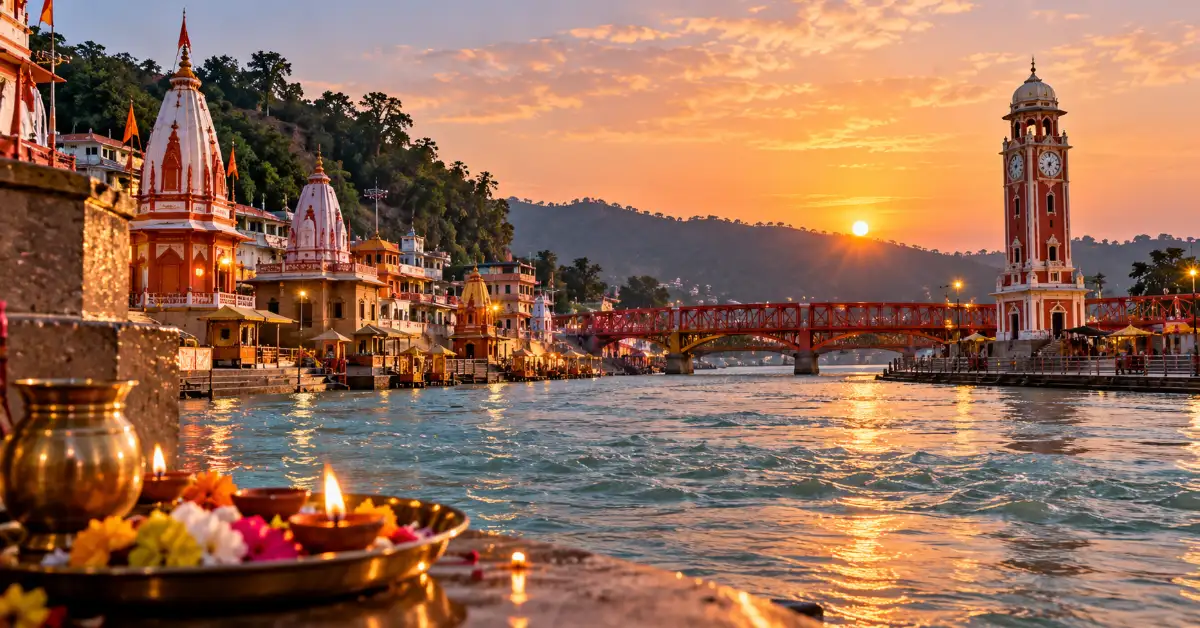
Quick Answer: Haridwar is a fully vegetarian, alcohol-free pilgrimage city on the Ganga. Dress modestly near temples and ghats, drink only bottled water, stay alert for common scams like fake guides and overpriced souvenirs near Har Ki Pauri, and visit in winter (December to February) for the most comfortable weather, unless you specifically want to experience Kumbh Mela or Kanwar Yatra.
Haridwar is one of India’s holiest cities, and it runs on rules most first-time visitors don’t expect until they’re already there. No meat, no alcohol, modest clothing at temples, and a level of crowd density that can genuinely catch you off guard during festival season. None of this makes the trip harder. It just means a little prep goes a long way. Here are the things to know before visiting Haridwar, covering everything from food rules to safety basics.
What Makes Haridwar Different From Other Trips
Haridwar sits where the Ganga leaves the Himalayan foothills and enters the plains, and that single fact shapes almost everything about the city. It’s one of the seven holiest places in Hinduism, home to the evening Ganga Aarti at Har Ki Pauri, and the traditional starting point for the Char Dham Yatra. Most visitors come for a mix of pilgrimage, peace, and a break from city life, and the whole town is built around that purpose.
Food and Alcohol Rules You Should Know
This catches more first-timers off guard than anything else. Haridwar is entirely vegetarian, and alcohol is not sold or served anywhere in the city. This isn’t a suggestion, it’s how the whole food scene here operates, out of respect for the city’s religious significance. Come in expecting simple, fresh vegetarian food, aloo puri, thalis, and local sweets, rather than the usual mixed menu you’d find elsewhere.
Temple and Ghat Etiquette
A few habits will make your visit smoother and more respectful.
- Dress modestly, covering shoulders and knees, especially near temples and ghats
- Remove your shoes before entering any temple
- Photography is often restricted inside the inner sanctum of temples, so check before you shoot
- Avoid public displays of affection or loud behavior near religious sites
- If someone offers a paid ritual or “special blessing,” it’s usually a way to extract money, politely decline and stick to recognized temples for any puja
Common Scams to Watch For
Among the most useful haridwar tips for first timers is simply knowing what the common scams look like. Haridwar is generally a safe city, but like any major pilgrimage destination, it attracts a few predictable scams, mostly around Har Ki Pauri, the railway station, and busy markets.
- Fake guides: Someone claiming to be an official guide who demands a high fee or steers you toward shops paying them commission
- Overpriced souvenirs and religious items: Especially near ghats and temples, where prices aren’t fixed
- Rickshaw overcharging: Meters aren’t used, so agree on a fare before you get in
- Donation scams: Requests for money toward causes that aren’t legitimate
- Fake accommodation deals: A suspiciously cheap rate that changes once you arrive, or a property that doesn’t match what was advertised
None of this should scare you off. Just stay a little alert, especially in crowded areas, and book accommodation through platforms with verifiable reviews.
Health and Safety Basics
Tap water in Haridwar is not safe for tourists, stick to bottled or filtered water throughout your stay. Stomach upsets are common for first-time visitors to India generally, so ease into local food rather than diving in on day one. Pickpocketing is the most common petty crime, particularly in the dense crowds during the evening Ganga Aarti, so keep your phone and wallet in a secure inner pocket rather than an open bag.
Save local emergency numbers before you arrive: 112 for general emergencies, 1091 for women’s safety, and 1364 for tourist assistance.
Weather and When to Go
| Season | Months | What to Expect |
|---|---|---|
| Winter | December–February | Cool and pleasant, 5°C to 25°C, best for sightseeing |
| Spring/Summer | March–June | Warmer, rising to around 35°C by May |
| Monsoon | July–September | Heavy rain, flooding risk near the river, best avoided |
Winter is generally the most comfortable window for a first visit, clear skies, manageable temperatures, and easy walking around the ghats. Carry warm layers regardless of season if you’re visiting the ghats early morning or evening, since the riverside stays cooler than the rest of the city.
Plan Around Major Crowd Events
Haridwar hosts the Purna Kumbh Mela roughly once every 12 years and the Ardh Kumbh roughly every 6 years, both drawing tens of millions of pilgrims. Outside of Kumbh, the Kanwar Yatra in July and August also brings enormous crowds every single year. During these periods, expect disrupted local transport, sharply higher accommodation prices, and very dense crowds at the ghats. If a peaceful trip is the goal, avoid these windows. If you specifically want to experience one, plan well ahead and book accommodation early.
FAQs
This haridwar travel guide for beginners wouldn’t be complete without answering the questions first-timers ask most.
Is alcohol allowed in Haridwar? No. Haridwar does not sell or serve alcohol anywhere in the city, out of respect for its religious significance as one of Hinduism’s holiest cities.
What should first-time visitors know before going to Haridwar? Expect a fully vegetarian city with no alcohol, dress modestly near temples and ghats, drink only bottled water, and stay alert for common scams like fake guides and overpriced souvenirs near busy areas.
Is Haridwar safe for tourists? Generally yes. Petty crime like pickpocketing and minor scams do occur, mostly in crowded areas like Har Ki Pauri, but serious crime is uncommon. Basic precautions go a long way here.
When should I avoid visiting Haridwar? Avoid the monsoon months of July through September due to flooding risk, and be prepared for very heavy crowds during Kumbh Mela years and the annual Kanwar Yatra in July and August.