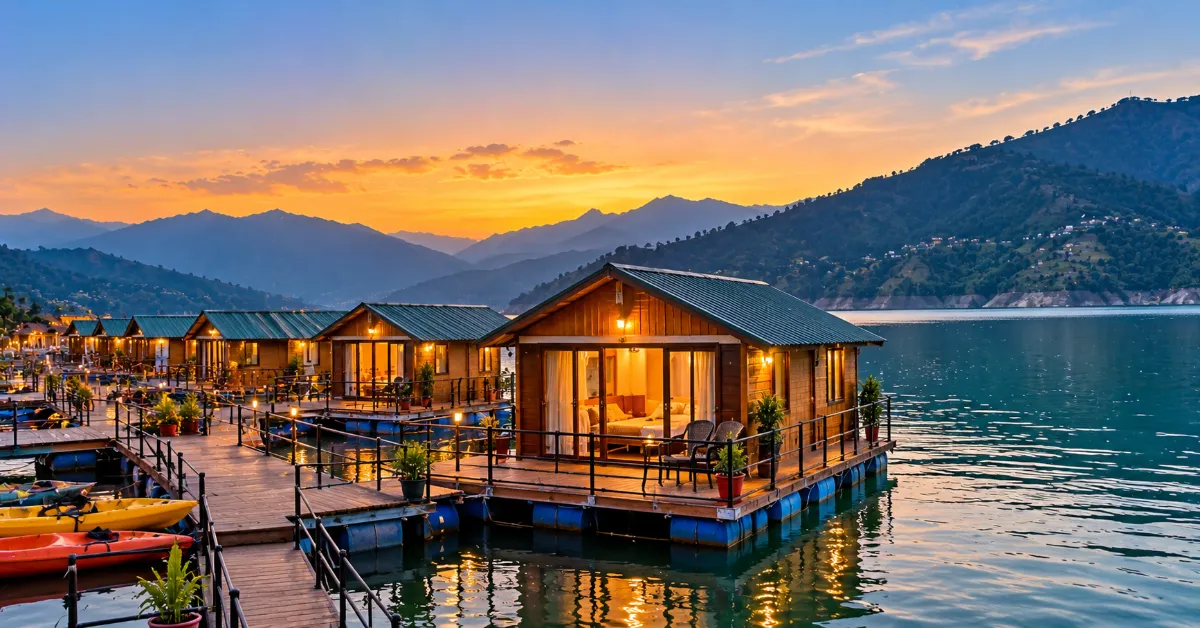
Most pages about the Tehri floating huts show you a drone shot and call it the Mini Maldives. Very few tell you the price.
That’s the frustrating part. Rates swing by thousands depending on the room type and the month, taxes get added on top, and breakfast often isn’t included. So people book expecting ₹5,000 and pay ₹9,000.
Here’s the actual Tehri floating huts price across room types, checked in October 2026 across Expedia, Yatra, ixigo, Booking.com and trivago, plus the extra charges nobody mentions and a straight answer on whether it’s worth it.
How Much Do the Tehri Floating Huts Cost Per Night?
A floating hut on Tehri Lake costs roughly ₹5,300 to ₹9,500 per night for two people. Eco rooms on land start lower, near ₹4,300. Larger family units and peak-date bookings run from ₹11,750 up to ₹14,150. Taxes come on top of all of these.
| Room type | Typical price per night | Notes |
|---|---|---|
| Deluxe economy room (on land) | ₹4,300 to ₹4,700 | Cheapest entry, no lake underneath you |
| Deluxe room on land | ₹4,500 to ₹5,300 | Lake view, solid ground |
| Floating hut over the lake | ₹5,300 to ₹7,100 | The one people actually come for |
| Floating hut with balcony | ₹6,950 to ₹9,500 | Best photos, best mornings |
| Family or luxury units | ₹11,750 to ₹14,150 | Peak dates and bigger groups |
Rates checked October 2026. They move week to week, and March to June runs highest.
That table is the honest version. Now the part that changes your final bill.
What drives the price up or down
- Room type matters more than the season. A land room and a balcony hut can differ by ₹5,000 on the same night
- March and April are peak search and peak price, because the water sports season opens and the Tehri Lake Festival pulls crowds
- Weekends cost more than weekdays, and the gap widens from April onwards
- Taxes aren’t in the headline rate. Indian hotel GST runs 12% on rooms under ₹7,500 and 18% above that, so a ₹11,900 room adds over ₹2,100
- There are only about 20 huts in total, so the cheap ones go first and you’re left comparing the expensive ones
So the real question isn’t the rate. It’s what’s bundled into it.
What Extra Charges Should You Expect?
Budget around ₹800 to ₹1,500 above the room rate for a couple. Breakfast is usually charged separately at about ₹390 per person, an extra bed costs around ₹3,360 per night, and early check-in carries a fee of roughly ₹590.
Water sports are separate too. Jet skiing, kayaking and boat rides are paid per activity at the lake, not billed to the room.
The extra bed charge catches people out most often. At ₹3,360, adding a third adult to a hut costs almost as much as a second room in New Tehri town.
Costs to plan for beyond the room
- Breakfast at roughly ₹390 per person, so about ₹780 a day for two
- Extra bed at around ₹3,360 per night, which makes three-adult bookings expensive
- Early check-in fee near ₹590 if you reach before the 2 pm check-in time
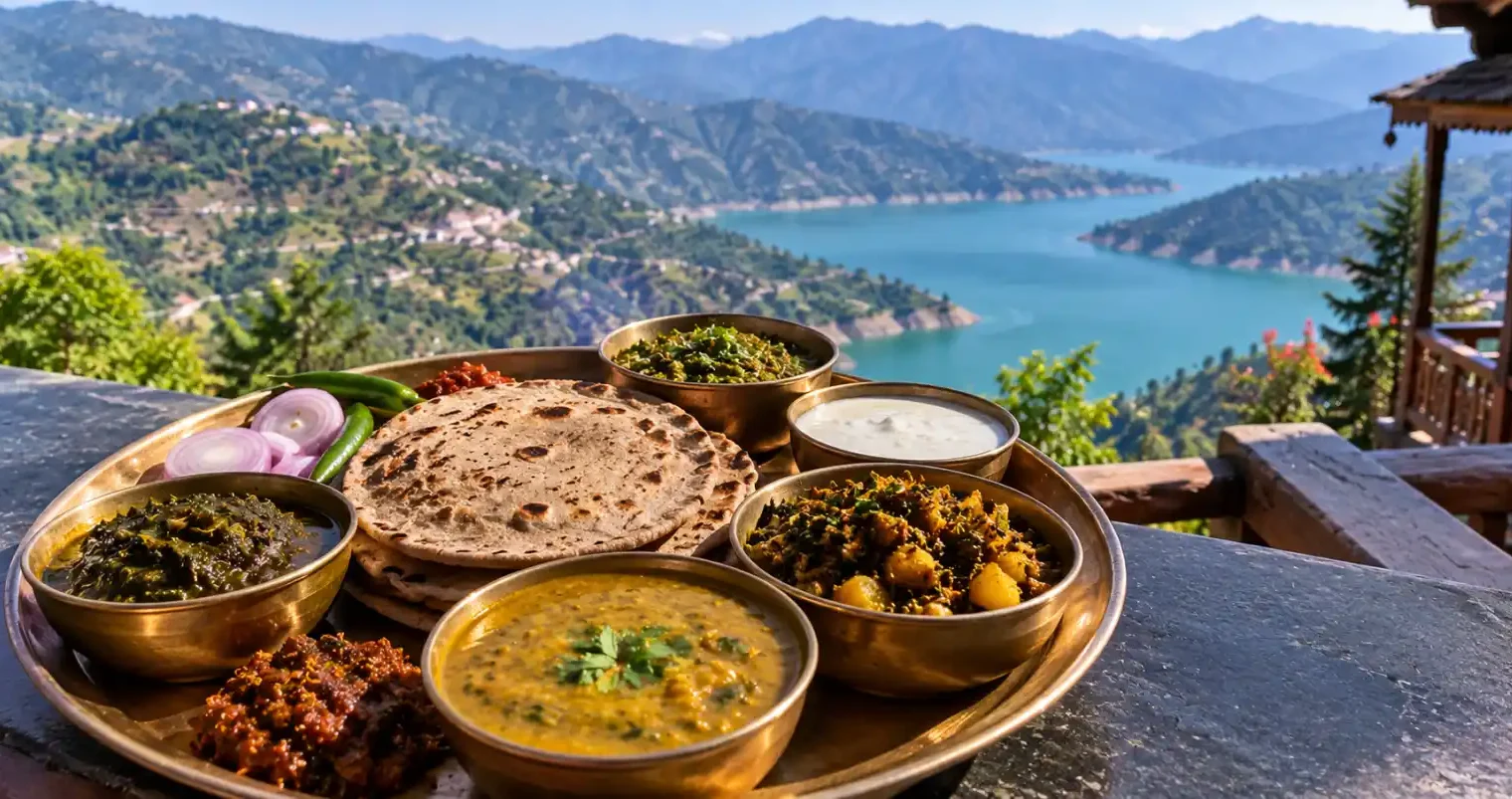
- Lunch and dinner at the on-site floating cafeteria, since outside restaurants are far
- Water sports and boat rides paid directly at the boat club, not through the hotel
Add it up before you compare the room rate with other Tehri hotels. The gap is bigger than it looks.
What Do You Actually Get for the Money?
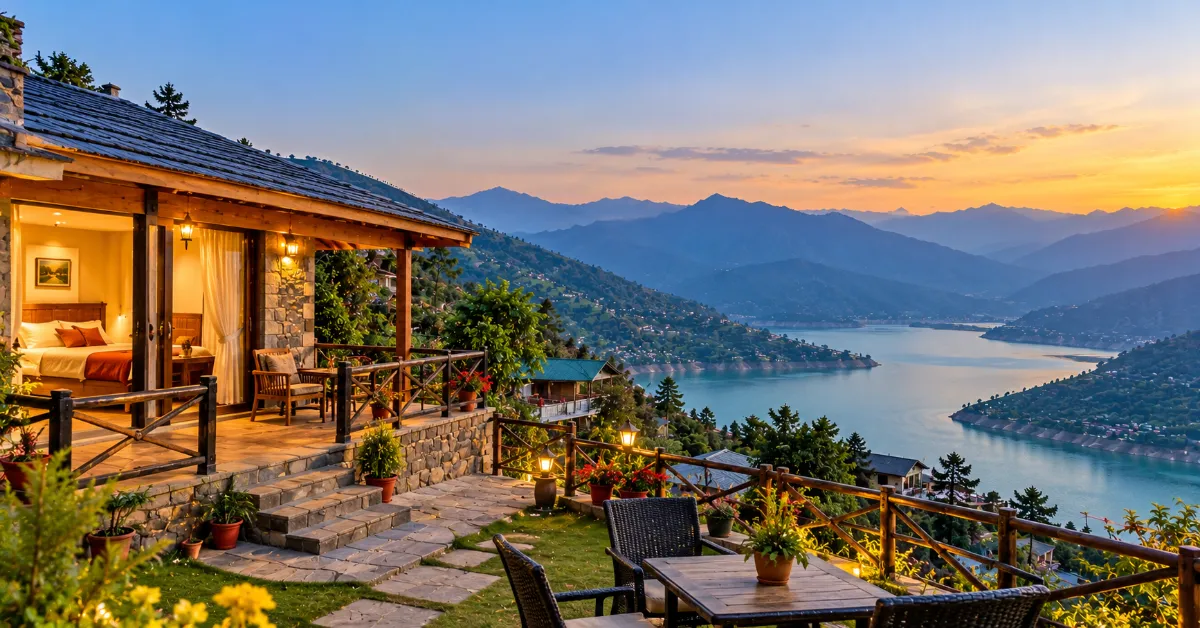
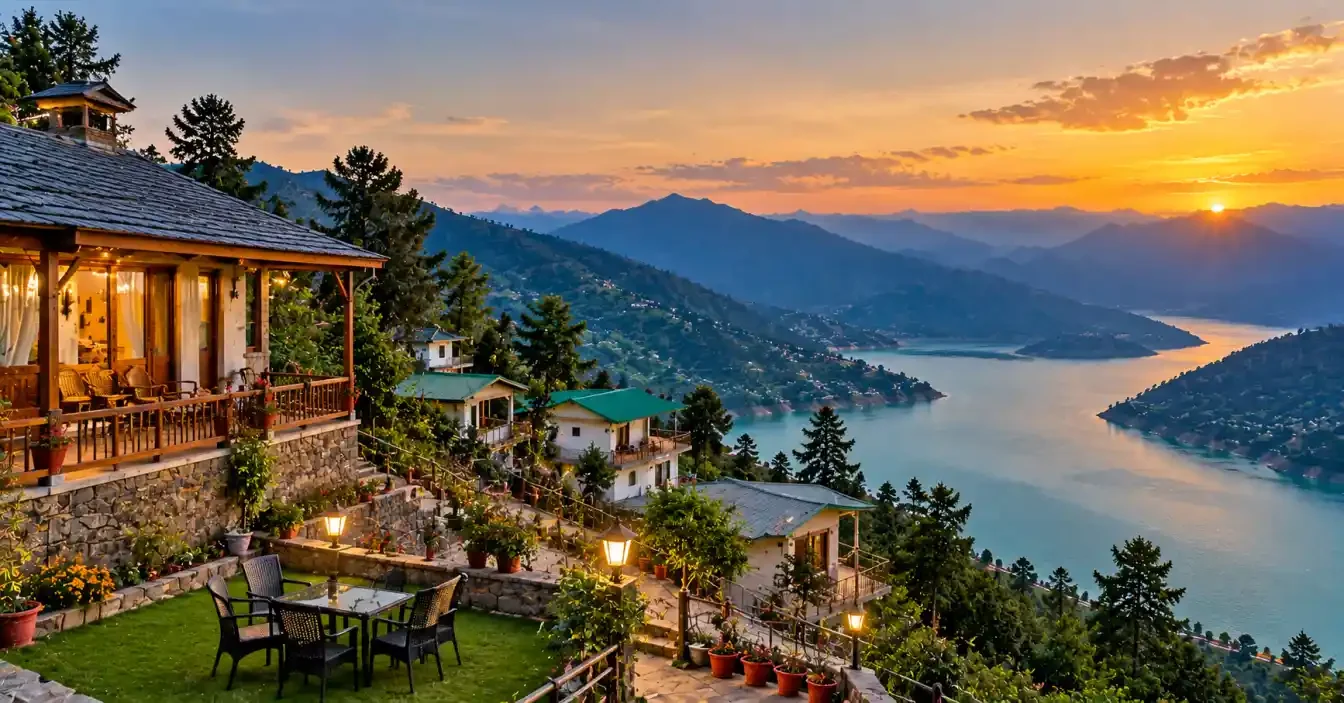
You get a log-style hut anchored on Tehri Lake at about 5,500 feet, with water on every side, a private bathroom, air conditioning and a floating cafeteria for meals. Around 20 huts float together on the lake, with eco rooms built on land beside them.
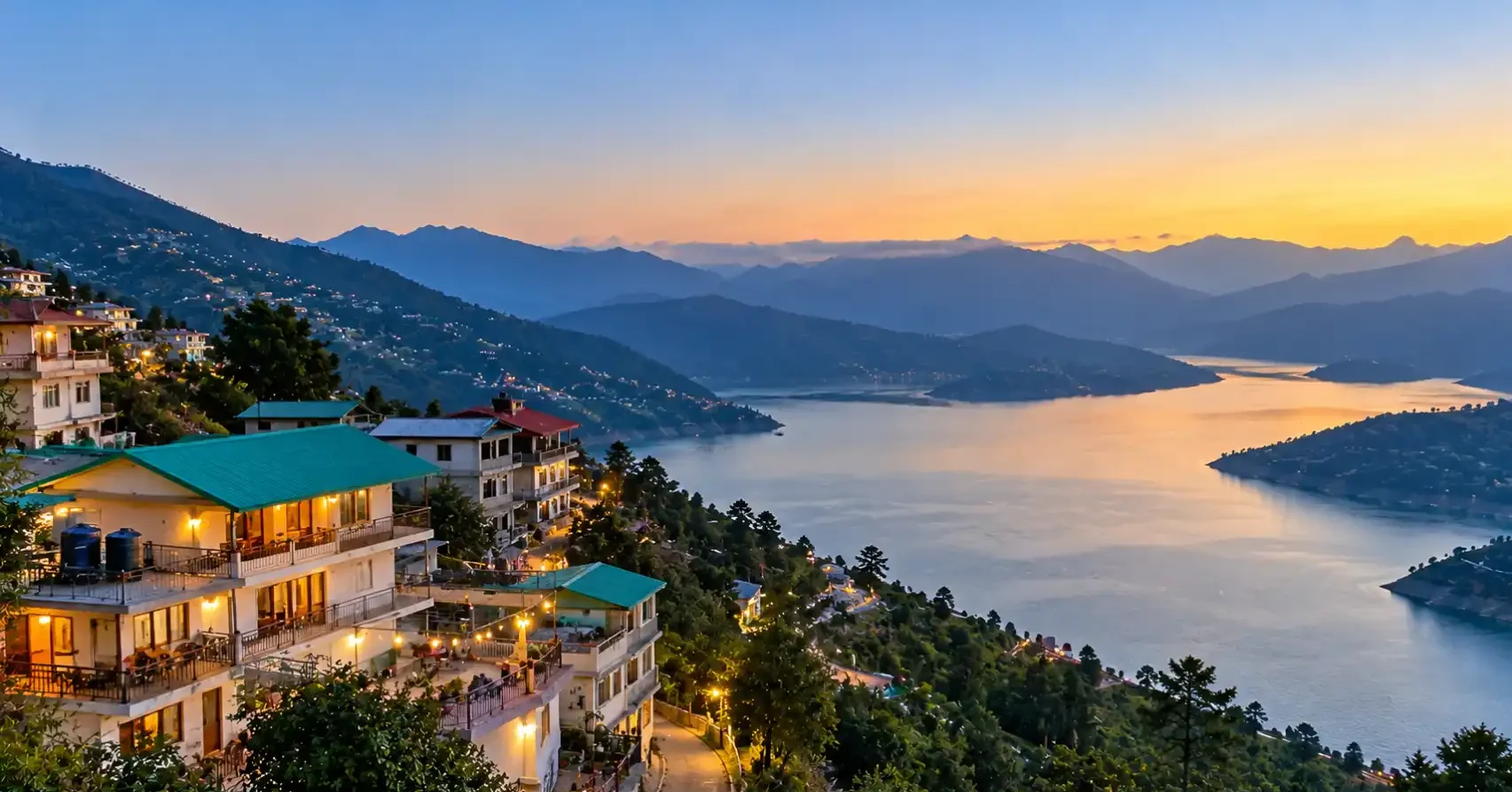
The property sits at Sahrai near New Tehri, close to the Dobra Chanti bridge. Kayaking and jet skiing run from here, and live music plays some evenings.
What you don’t get is a resort. No pool, no spa, no elevators, and pets aren’t allowed. The huts are compact at roughly 16 square metres, which is small for three people.
What’s included and what isn’t
- Included: the hut, attached bathroom, air conditioning, free parking, WiFi in public areas and room service
- Not included: breakfast in most rate plans, water sports, extra beds and early check-in
- Hut size is around 16 square metres, so two people fit comfortably and three feel cramped
- Check-in starts at 2 pm and check-out is 11 am, a standard 21-hour stay
- Payment works by card, UPI or cash, but keep cash for the water sports operators
Now, the money question everyone types into Google at 1 am.
Are the Tehri Floating Huts Worth the Price?
For one night, yes, if the experience is the point. For a three-night stay, no. Guest ratings sit around 4.1 out of 5 on MakeMyTrip from 749 ratings and higher on some Indian platforms, but several international listings hover near 7.2 out of 10, mostly on service and upkeep.
That spread tells you something useful. People who book it as a novelty night come away happy. People expecting Maldives-grade service at ₹6,000 do not.
Pay for the floating hut if you’re a couple, a photographer, or someone who wants one stay they’ll remember. Book the land rooms if you’re travelling with parents or small kids, because walkways over water plus late-night bathroom trips are a bad mix.
Who should book it and who should skip it
- Worth it for couples and small groups doing one night as the highlight of a Tehri trip
- Worth it in March to June and September to November, when the water is calm and mornings are clear
- Skip it if you need resort service standards, because this is a 3-star property at heart
- Skip the huts with three adults, since the extra bed cost and the room size both work against you
- Skip monsoon dates in July and August, when hill roads close and lake activities get cancelled
If it’s a yes, book early. Here’s how.
How Do You Book the Tehri Floating Huts?
You can book through online travel platforms like MakeMyTrip, Yatra, Booking.com, Expedia and ixigo, or directly with the property. Rates differ between platforms on the same date, sometimes by ₹1,000, so check at least three before paying.
Direct booking is worth a call for weekday stays and longer bookings, because that’s where properties usually have room to adjust.
Free cancellation shows up on most platform listings, but the deadline is often several days before check-in. Read that line before you lock peak-season dates.
Booking tips that save money here
- Compare at least three platforms. Price gaps of ₹700 to ₹1,000 on identical rooms are common
- Book three to four weeks ahead for March, April and long weekends, because 20 huts fill fast
- Pick weekday nights. Sunday to Thursday rates run noticeably below weekend ones
- Confirm whether breakfast is in your rate plan, since the same room sells both ways
- Ask whether the hut is on the outer edge or the inner cluster, because the outer ones get the open view
How Do You Reach the Floating Huts?
The property sits at Sahrai near New Tehri, which is about 75 km from Rishikesh and roughly 76 km from Dehradun airport. The drive from Rishikesh takes 2.5 to 3 hours on NH-94 through Narendranagar and Chamba. From Delhi, expect 7 to 8 hours.
You can drive right up to the huts, or arrive by boat from the Koti Colony boating point, which is the better version if you’re not in a hurry.
Time your evening for the Dobra Chanti bridge nearby. It’s India’s longest single-lane motorable suspension bridge at 725 metres, and the lights on it run from about 6:30 pm to 8:30 pm.
FAQs
How much does a floating hut in Tehri cost per night?
A floating hut over Tehri Lake costs roughly ₹5,300 to ₹9,500 per night for two, depending on whether it has a balcony and how close the date is. Eco rooms on land start near ₹4,300. Taxes of 12% or 18% apply on top of these rates.
Is breakfast included in the Tehri floating huts price?
Usually not. Most rate plans charge breakfast separately at around ₹390 per person, which works out to roughly ₹780 a day for two. Some platforms sell the same room with breakfast bundled, so check the rate plan details before you confirm the booking.
How many floating huts are there on Tehri Lake?
About 20 floating huts sit anchored together on Tehri Lake at Sahrai, near New Tehri, along with eco rooms built on land beside them. Because the number is small, peak-season dates in March and April sell out several weeks in advance.
Can three people stay in one floating hut?
Technically yes, but it gets expensive and tight. The huts are around 16 square metres, and an extra bed costs about ₹3,360 per night. For three adults, two land rooms or a family unit usually works out better on both space and money.
What is the cheapest month to book Tehri floating huts?
July and August are cheapest, but that’s monsoon, when hill roads close and water activities get cancelled. The better value window is late September to early November, when weather is clear, the lake is calm, and rates sit well below the March to June peak.
Can you book the floating huts directly instead of through an app?
Yes. The property takes direct bookings, and a call is worth it for weekday stays or bookings of two nights or more. Still compare against MakeMyTrip, Yatra and Booking.com first, because platform discounts sometimes beat the direct rate.
Final Word
The Tehri floating huts price makes sense once you stop comparing it to a hotel room and start comparing it to an experience. Around ₹6,000 to ₹7,000 for a night on the water, taxes and breakfast on top, is fair for what it is.
Book one night, not three. Take the balcony hut if the budget stretches. Arrive by boat if you can.
And set the right expectation going in. It’s a quiet, slightly rough-edged place floating on a beautiful lake, which is a better thing to be than a copy of somewhere else.