Quick Answer
If you want classic Goa, sun, beaches, and nightlife, plan your trip for November through February.
If you prefer fewer crowds and lower prices and don’t mind rain, the monsoon months between June and September offer a completely different, greener side of the state.
Either way, understanding goa weather by month before you book makes the difference between a trip that matches your expectations and one that doesn’t.
Best Time to Visit Goa: A Complete Trip Planner
The best time to visit Goa is between November and February, when the weather turns cool and dry and the state hits its peak beach season.
That said, the right season for you depends on whether you are chasing peak festivities, budget rates, or quiet, empty beaches.
Goa has a genuinely tropical climate, hot for most of the year, so timing your trip well changes the whole experience.
Goa Weather by Month: The Three Seasons
Goa’s climate breaks into three broad seasons, and each one changes the trip completely.
Winter (Late October to February)
This is goa peak season, and for good reason.
Daytime temperatures hover between 26°C and 32°C, humidity drops, and rainfall all but disappears, with several winter months recording under 6mm of rain and up to 9 to 10 hours of daily sunshine.
December is typically the coolest month, occasionally dipping to around 25°C, while nights can feel noticeably crisper away from the coast.
This is when Goa’s beach shacks reopen in full force, watersports resume, and the state’s famous Christmas, New Year, and Sunburn Festival crowds arrive.
Flights and hotels across North and South Goa alike start filling up quickly.
Expect the highest hotel rates and the busiest beaches of the year, especially in North Goa around Baga, Calangute, and Anjuna. For a full breakdown of the best beaches in Goa, from lively northern strips to quieter southern stretches, see our complete guide.
Summer (March to May)
Temperatures climb sharply here, often crossing 35°C and touching close to 40°C by May, the hottest month of the year on record for the region.
Humidity builds steadily through the season, and sunshine hours stay high for most of the period.
Tourist numbers drop noticeably compared to winter, which means:
- Lower hotel rates
- Shorter queues at popular sights
- Fewer crowds compared to the winter season
Locals note that a sea breeze typically kicks in after 3 PM, which takes the edge off the heat during beach hours.
This window suits budget travelers and those who don’t mind trading comfort for savings.
However, midday sightseeing away from the coast can feel draining.
Monsoon (June to September)
The southwest monsoon arrives by early June and brings the bulk of Goa’s roughly 3,000mm of annual rainfall on the coast.
July is consistently the wettest month, with average rainfall close to 995mm to over 1,200mm depending on the exact station.
Rainfall is spread across 25 to 28 rainy days, alongside very high humidity near 85 percent and reduced sunshine of just a few hours a day.
Many water sports operators shut down for the season, and the sea turns rough and unsafe for swimming.
On the upside, this is when Goa turns a deep, dramatic green, hotel prices bottom out, and locals will tell you the state is at its most atmospheric.
The monsoon season is ideal for experiences like:
- River cruises
- Waterfall treks to spots like Dudhsagar
- Festivals like Sao Joao
October acts as a transition month, as the rains ease and the dry season begins to return.
However, isolated late showers are still possible well into the first half of the month.
Sea Temperature and Swimming Conditions
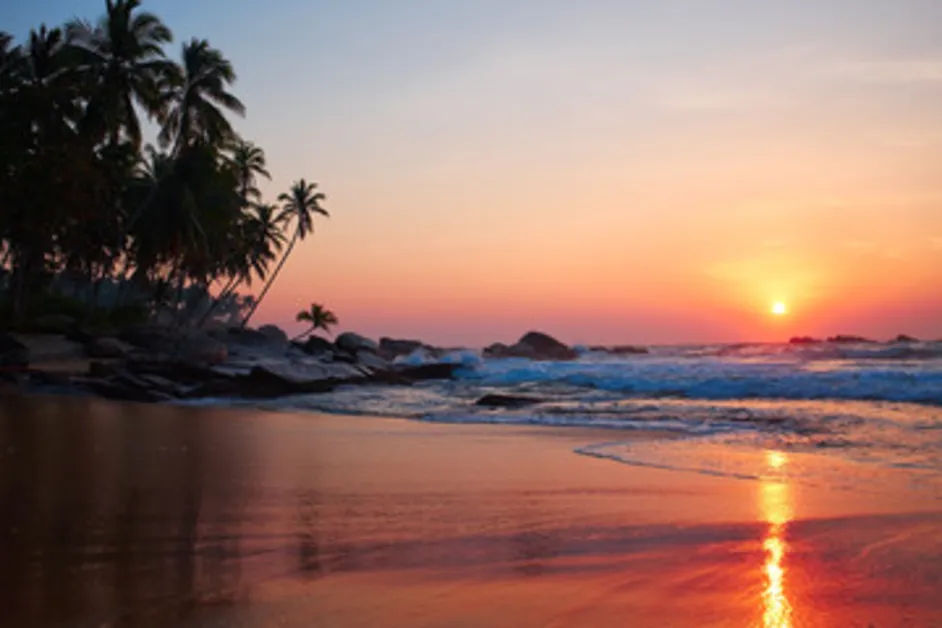
The Arabian Sea off Goa stays warm enough for swimming through most of the year, generally sitting in the high twenties to around 30°C.
The calmest, safest swimming conditions run from November through May, when the sea is settled and clear.
During the monsoon months, currents strengthen and undertows become a real risk.
This is why most beach authorities restrict swimming and many lifeguard stations scale back operations between June and September.
When to Visit for What You Want
- For nightlife and festivals: Late December through January, especially around Christmas, New Year, and the Sunburn Festival in Vagator.
- For budget travel: April to May, or anytime during the June to September monsoon, when hotel rates fall well below peak-season pricing. Kerala follows a similar monsoon pattern, so if you are weighing both coasts, see our guide on the best time to visit Kerala.
- For quiet, uncrowded beaches: June to September, when tourist numbers are at their lowest and beaches like Palolem and Agonda feel almost empty. If you are planning a wider coastal trip, our roundup of the best beaches in India covers more options beyond Goa.
- For pleasant weather without peak crowds: Late October to early November, or February, just outside the busiest rush.
- For swimming and watersports: November to May, when the sea stays calm; monsoon months are best avoided for this.
Building Your Goa Trip Itinerary Around the Season
Your goa trip itinerary should follow the season you pick.
A winter trip works well for a classic beach-hopping plan across North and South Goa, church visits in Old Goa, and evening markets like the Anjuna flea market or Mapusa market.
A monsoon goa trip itinerary leans more toward:
- Dudhsagar Falls
- Heritage walks in Panjim’s Fontainhas quarter
- Spice plantation tours
- Indoor cultural experiences
Beach time is limited during this period because of rough seas and closed shacks.
A shoulder-season trip in October or April lets you combine both worlds, decent weather with lower prices.
However, you should still check which beach shacks and watersports operators have reopened for the season before you travel.
Some smaller operators wait until the crowds pick up in November.
Whichever season you choose, book accommodation further in advance for the December to January window.
This is when rates rise sharply and rooms fill up fastest, particularly around Christmas and New Year in North Goa.
What to Pack for Each Season
Packing changes a lot depending on when you travel.
For the winter peak season, light cottons work during the day.
However, carry a light jacket or shawl for cooler December and January evenings, especially if you plan to be out late on the beach.
For summer, prioritize:
- Breathable fabrics
- A wide-brimmed hat
- Strong sunscreen
The combination of heat and humidity from March to May can be draining if you are not prepared.
For the monsoon, a good rain jacket or poncho, quick-dry clothing, and waterproof footwear matter more than anything else.
Regular shoes and sandals can struggle with the flooded streets and constant showers typical of July and August.
Festivals Worth Timing Your Trip Around
Goa’s festival calendar is closely tied to its seasons.
The Sunburn Festival, one of Asia’s largest electronic dance music festivals, runs over several days in late December in Vagator and draws large crowds from across the country and abroad.
This also pushes accommodation prices to their highest point of the year.
Christmas and New Year celebrations light up Old Goa’s churches and beach towns alike.
Shigmo, Goa’s spring festival with colorful parades and folk performances, typically falls in March.
Sao Joao, a lively monsoon celebration involving well-jumping and river processions, takes place in June in villages like Siolim.
It is one of the few festivals worth braving the rains for.