
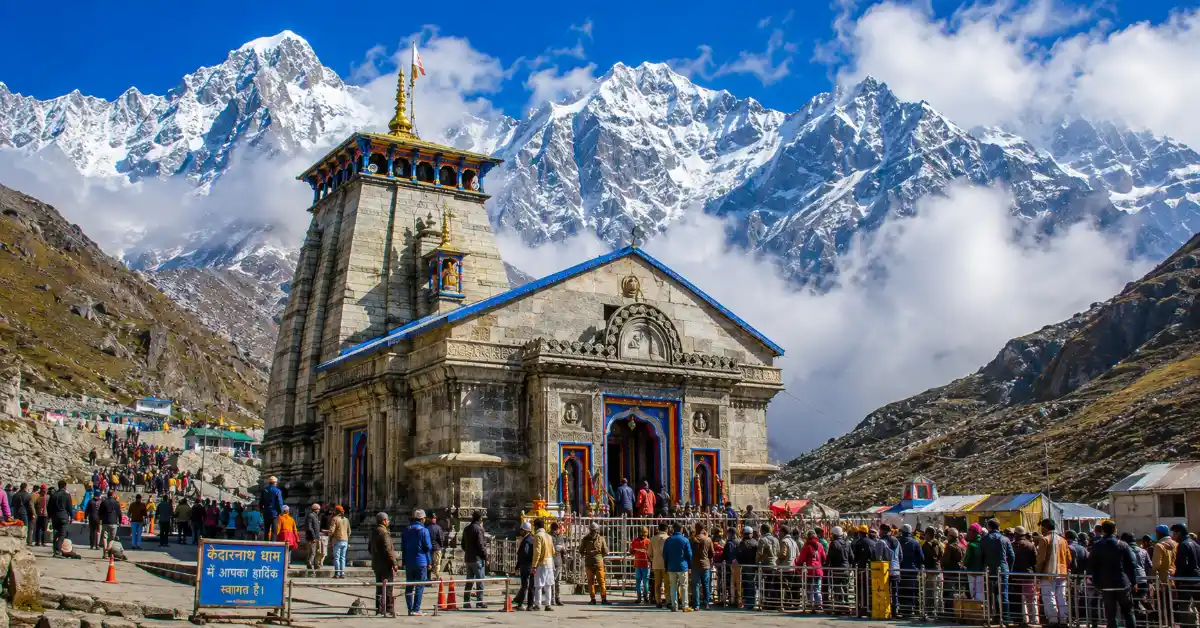
No road goes all the way to Kedarnath. That’s the first thing to understand about this pilgrimage, and it shapes everything else about how you plan it.
Sitting at 3,583 meters in the Garhwal Himalayas, Kedarnath is one of the four Char Dham shrines and one of the 12 Jyotirlingas. Getting there means a real trek, or a helicopter ride, or a pony if walking isn’t an option. Here’s exactly how each works, what it costs, and when to go.
When Should You Go
Weather decides everything here, so timing isn’t a small detail.
| Window | What to Expect |
|---|---|
| May–June | Pleasant weather, high pilgrim numbers |
| July–August | Monsoon, landslide risk, best avoided |
| September–October | Clear skies, thinner crowds, ideal conditions |
| November–April | Temple closed, region snowbound |
Most guides agree on this: May–June and September–October are your two safe windows. Monsoon months bring genuine risk to the mountain roads, not just discomfort, so it’s worth planning around them rather than through them.
The Route, Step by Step
The kedarnath yatra trek distance is what trips up most first-timers, since the road only takes you so far. Every pilgrim, whether flying in or driving, ends up at the same bottleneck: Gaurikund. That’s where the road stops and the trek begins.
- Haridwar or Rishikesh to Sonprayag: roughly 210–270 km by road, 10–12 hours
- Sonprayag to Gaurikund: about 5 km, covered only by government shuttle, private vehicles aren’t allowed past Sonprayag
- Gaurikund to Kedarnath: 16–18 km on foot, 6–8 hours depending on fitness
The trek itself breaks into segments. Gaurikund to Jungle Chatti is around 4 km, gradual. From there to Bhimbali, then Linchauli, the climb steepens. The final stretch from the base camp into Kedarnath is short but climbs sharply.
Trek, Pony, or Helicopter
Not everyone can, or wants to, walk 16 km uphill at altitude. There’s no wrong choice here, just different trade-offs.
Trekking costs the least and gives you the full experience, tea stalls, fellow pilgrims, mule trains passing by. It also takes the most out of you physically.
Pony or palki works well for anyone who can’t manage the full walk but still wants to travel by land. A pony runs roughly ₹2,500–3,500 one way, a palki (carried by porters) closer to ₹7,000–10,000, both government-rate controlled.
A kedarnath yatra helicopter booking cuts the journey to 10–15 minutes in the air, landing you about 500 meters from the temple. Fares start around ₹3,500–8,500 depending on which helipad you fly from, Phata, Sirsi, or Guptkashi. This is the go-to option for elderly pilgrims or anyone tight on time.
Registration — Don’t Skip This
Kedarnath yatra registration is mandatory. Not optional, not something you can wing at the last minute.
Every pilgrim needs a Yatra Registration Number before reaching the Sonprayag checkpoint. You won’t get past it without one. Registration is free and done online at the official Uttarakhand Tourism portal, or offline at counters in Haridwar, Rishikesh, and Sonprayag.
Do it two to three weeks before you travel. During peak season, more than a lakh registrations can happen in a single day, and slots for helicopter bookings especially fill up fast.
What It Actually Costs
Budget varies hugely depending on how you travel and where you stay.
| Option | Rough Cost |
|---|---|
| Budget trek trip (food, stay, local transport) | ₹6,000–12,000 |
| Pony one way | ₹2,500–3,500 |
| Palki one way | ₹7,000–10,000 |
| Helicopter one way | ₹3,500–8,500 |
| Full guided package | Varies widely by operator |
These are ballpark figures. Prices shift by season and operator, so treat this as a planning range, not a quote.
A Few Honest Tips
Start the trek early, ideally before sunrise. Afternoon weather in the mountains changes fast, and visibility can drop without much warning.
Spend a night in Guptkashi or Sonprayag before pushing up to Gaurikund. Altitude sickness doesn’t care how fit you are, and a night of acclimatization genuinely helps.
Pack for cold regardless of season. Even in June, temperatures near the temple can drop close to 5°C. A light rain jacket, warm layers, and comfortable trekking shoes matter more than almost anything else on your packing list.
Bringing It Together
The kedarnath yatra best time really comes down to two windows, May–June or September–October. Pick one, register early, and choose the trek, pony, or helicopter based on what your body and your schedule can actually handle. None of these options is the “right” way to do it. They’re just different doors into the same experience.
FAQs
How far is the Kedarnath trek? The trek runs 16 to 18 km one way from Gaurikund, the last point vehicles can reach, and takes most pilgrims 6 to 8 hours on foot.
How do I book a Kedarnath helicopter? Bookings go only through the official IRCTC HeliYatra portal. Third-party sites claiming instant tickets are usually scams, so stick to the official channel.
What is the best time for Kedarnath yatra? May to June and September to October offer the most stable weather. July and August bring monsoon rain and landslide risk, so most pilgrims avoid that window.
Is registration mandatory for Kedarnath yatra? Yes, and it’s free. Every pilgrim needs a registration number before crossing the Sonprayag checkpoint, so complete it online well before you travel.
Can seniors or unfit pilgrims still do this yatra? Yes. Pony, palki, and helicopter options all exist specifically for pilgrims who can’t manage the full trek on foot.