
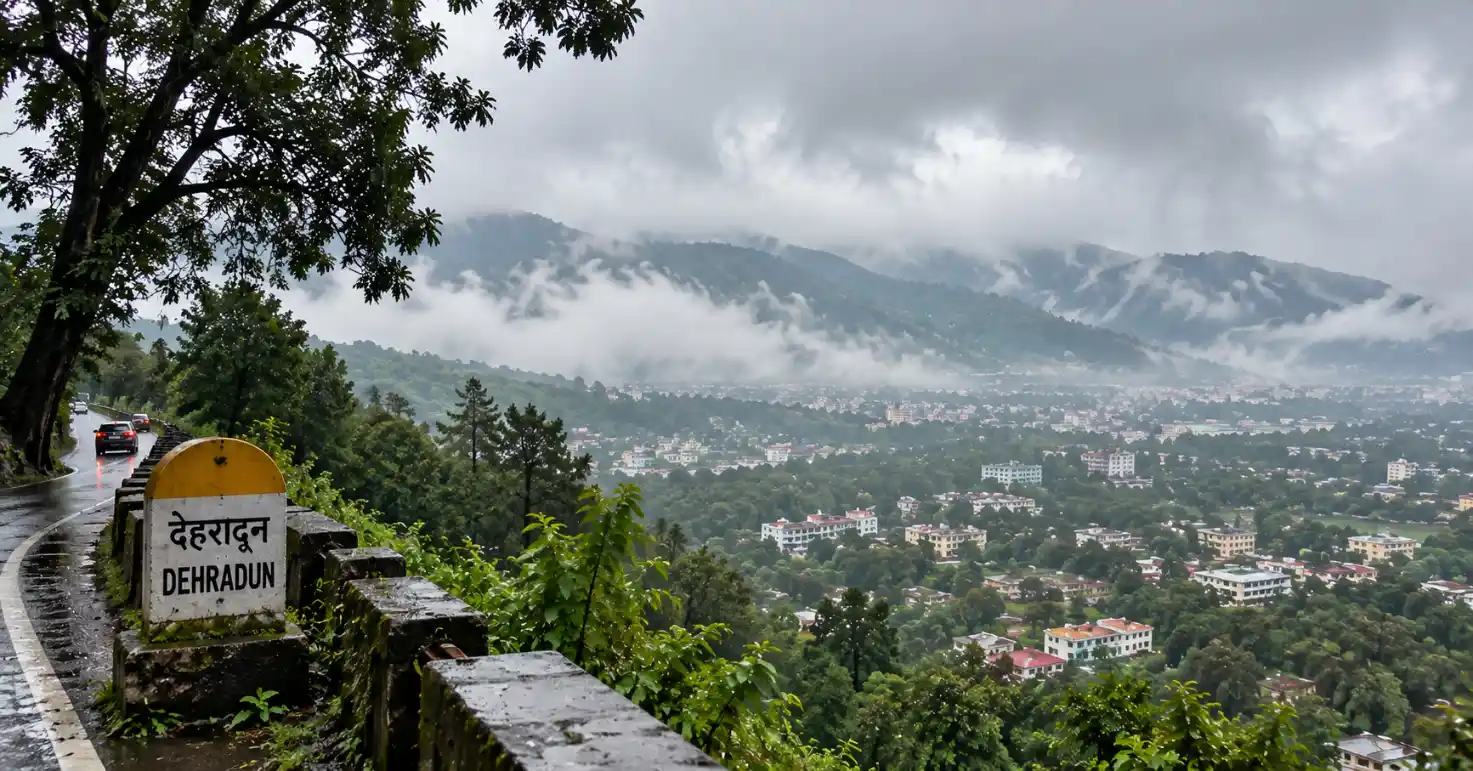
Short answer: yes, Dehradun itself is worth visiting in monsoon. The city handles heavy rain fine. Where things get genuinely dicey is the roads leading out of it, toward Mussoorie, Rishikesh, or the Char Dham shrines. If your trip stays mostly in Dehradun, this season can actually work in your favor.
The rain starts, and within minutes the whole valley smells different. Wet earth, wet pine, that specific smell you only get in a place surrounded by hills. Dehradun in monsoon isn’t the postcard version of Uttarakhand, but honestly? It might be the most underrated one.
What Monsoon Actually Looks Like Here
Dehradun monsoon weather runs from late June through September, and July-August is when it really means business, moderate to heavy rain, day after day. The Doon Valley, tucked into the Himalayan foothills, wears it well. Streams fill up fast. Waterfalls near Mussoorie, Kempty Falls especially, turn dramatic instead of pretty. And the whole valley just goes green in a way it doesn’t the rest of the year.
Temperature-wise, not much changes from summer, still sitting somewhere in the high 20s to mid 30s Celsius. What you’ll actually feel is the humidity. That’s the real difference.
The Real Risk: Hill Roads, Not the City Itself
Here’s the distinction that actually matters. Dehradun city stays manageable through monsoon. The danger sits on the roads climbing into the hills, Mussoorie, Rishikesh, Haridwar, and especially anything heading toward Char Dham, where landslide risk and sudden closures are a real thing through July, August, and into September.
This isn’t small print you can skim past, either. Uttarakhand’s hill roads have seen serious, sometimes fatal landslide incidents in bad monsoon years, so don’t wave this off as a minor inconvenience. If Mussoorie or a longer pilgrimage route is part of your plan, build in buffer days. Don’t drive the ghats after dark. Check road advisories before you head out, every single day, not just once at the start of the trip.
What’s Actually Good About Visiting in Monsoon
For anyone weighing dehradun rainy season travel against the usual summer trip, here’s what you actually gain:
- Fewer crowds: off-season means lower hotel rates and no waiting in line at the attractions that stay open
- Photogenic conditions: rain-washed streets, misty mornings, clouds sitting low over the valley, Rajpur Road especially looks like a different city
- Lush scenery: streams run fuller, gardens bloom, the whole place just looks different than it does any other month
- Good food weather: rain and hot pakoras go together in a way that’s hard to explain until you’ve done it
What to Avoid or Plan Around
Skip trails during sustained heavy rain, obviously. Stay away from anything near fast-moving streams, and don’t linger on exposed ridges during an electrical storm. Families can still manage short, easy walks or a park visit in light rain, just be back well before late afternoon, since conditions can shift fast. If Dehradun’s paired with a hill trip in your plans, treat the whole itinerary as flexible. Don’t push through if the advisory says wait.
Should You Actually Go?
If you’re centered on Dehradun itself, Robber’s Cave, Sahastradhara, the monasteries, monsoon is a genuinely good call. Fewer people, lower prices, and honestly, the city looks better wet than dry. But if Mussoorie or the Char Dham circuit is baked into your plans, go in expecting delays, not a fixed schedule.
FAQs
Is it safe to travel to Dehradun during monsoon? The city itself is generally manageable, but hill roads leading to Mussoorie, Rishikesh, and the Char Dham routes carry real landslide risk during heavy rain, so caution matters more there than in the city.
When does monsoon season start and end in Dehradun? Monsoon generally runs from late June through September, with the heaviest rainfall typically in July and August.
What should I avoid doing in Dehradun during monsoon? Avoid trekking or hiking during sustained heavy rain, driving hill roads at night, and pushing ahead into areas flagged by local road advisories as unsafe.
Are hotel prices lower in Dehradun during monsoon? Yes, monsoon is generally off-peak season, so hotel rates tend to drop and crowds thin out compared to the busy summer months.