
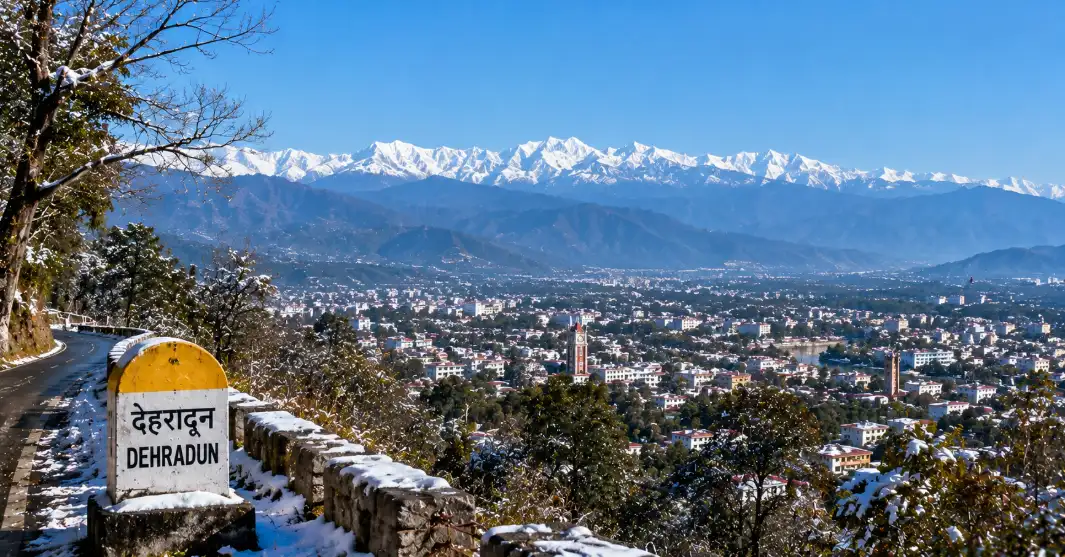
Quick Answer: Dehradun in winter means mild, sunny days, cold nights, and no snow in the city, though Mussoorie and Dhanaulti deliver on that front just up the road. Pack layers, expect some morning fog, and treat it as a calm, comfortable season for sightseeing, not a snowy wonderland in itself.
The mornings are the giveaway. Thick fog sitting over the valley, everything a little soft-edged until the sun burns through by mid-morning. That’s Dehradun in winter, cold starts, mild middles, and clear, crisp evenings that make you glad you packed that extra jacket.
Winter runs December through February, and dehradun winter temperature typically sits between 5°C and 20°C. January’s the coldest stretch. Here’s what you’re actually walking into.
The Weather, Realistically
Dehradun weather december january looks like this: days stay mild, often sunny, climbing into the high teens or low 20s Celsius. Nights and early mornings, though, drop hard, sometimes down to 5°C or lower, especially in January. Fog shows up regularly on winter mornings too, thick enough that it can mess with visibility and even delay a flight or two. If you’re flying in during peak winter, don’t book a tight connection.
December’s usually the driest month of the year here, so expect plenty of clear, sunny afternoons even when the mornings start out grey and cold. By February, rain picks up slightly, though it’s nothing close to monsoon levels.
Does It Actually Snow in Dehradun?
No. Not really, not in the city itself. Most years, it just doesn’t happen, even though the cold makes you feel like it should.
What you will find is snow close by. Mussoorie, about an hour up the road, gets it regularly through December, January, and February. Same goes for Dhanaulti. So if snow’s the whole point of your trip, the move is simple: base yourself in Dehradun, day-trip up to Mussoorie or Dhanaulti, and let the hills do what the valley won’t.
What There Is to Do
Winter doesn’t shut the city down, it just changes the pace. Clear skies and cool air make it a genuinely nice season for wandering around Robber’s Cave, Sahastradhara, or the Forest Research Institute, minus the summer crowds elbowing past you.
If city sightseeing isn’t enough, there’s more just outside it. Nag Tibba stays open for winter trekking if you’re up for cold-weather hiking. And if you want to stretch further, Auli’s skiing or Mussoorie’s paragliding both work as day-trip extensions from a Dehradun base.
What to Pack
Layer up, that’s really it. Days feel fine in a light sweater, but mornings and evenings need real warmth, not just a windbreaker. If you’re out early or back late, gloves and a scarf earn their keep, especially in January.
- Daytime: Light layers, a warm sweater or fleece
- Mornings and evenings: A proper winter jacket, since temperatures drop sharply after sunset
- Heading to Mussoorie or Dhanaulti for snow: Waterproof boots and heavier layers, since it’s noticeably colder up there than down in the valley
Is Winter a Good Time to Visit?
Yes, generally. A winter trip dehradun offers tends to be calm and uncrowded, pleasant days, clear skies, easy sightseeing without fighting the summer rush. The main adjustment is the cold mornings and evenings, and accepting that if you want snow, you’re driving to it, not waking up to it.
FAQs
Does it snow in Dehradun during winter? Rarely in the city itself. Nearby Mussoorie and Dhanaulti, both about an hour away, regularly see snowfall through December, January, and February.
What is the coldest month in Dehradun? January is typically the coldest, with average lows around 5°C to 6°C, sometimes dropping further on particularly cold nights.
What should I pack for a winter trip to Dehradun? Light layers for daytime and a proper jacket for mornings and evenings. If you’re day-tripping to Mussoorie or Dhanaulti for snow, pack waterproof boots and warmer layers too.
Is winter a good time to visit Dehradun? Yes. It’s a calm, uncrowded season with pleasant daytime weather, clear skies, and comfortable conditions for sightseeing, minus the summer rush.