
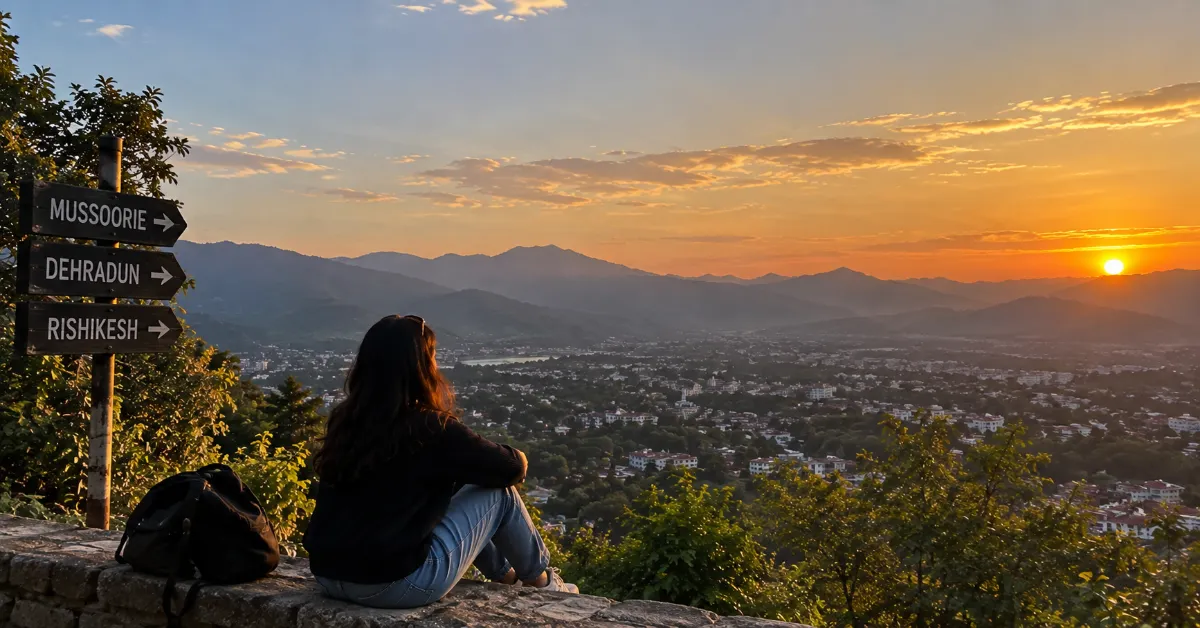
March to June is the best time to visit Dehradun for most travelers, pleasant weather, clear skies, and every attraction fully open. But that’s not the whole story. Winter has its own quiet charm, and even monsoon has a case if you don’t mind rain. Here’s the honest month-by-month breakdown.
Quick Overview
Looking at dehradun weather by month, the pattern breaks into four fairly distinct seasons.
| Season | Months | Temperature | What to Expect |
|---|---|---|---|
| Summer | March–June | 17°C–35°C | Peak season, pleasant days, biggest crowds |
| Monsoon | July–September | 17°C–33°C | Heavy rain, landslide risk toward Mussoorie |
| Autumn | October–November | Cool, clear | Fewer crowds, arguably the best weather of the year |
| Winter | December–February | 2°C–17°C | Cold nights, no snow in the city itself |
Summer (March to June): The Popular Choice
This is Dehradun’s peak tourist season, and it earns that reputation honestly. Days stay pleasant, generally between 17°C and 35°C, with June running hottest, sometimes touching the upper 30s on the worst days. Clear skies and dry air make this the easiest window for sightseeing, trekking, and general outdoor activity.
The trade-off is crowds. Since this overlaps with school summer holidays, hotels fill up fast and prices climb, so booking ahead matters more here than in any other season.
Monsoon (July to September): Green, Wet, and Underrated
Rain arrives properly by July and sticks around through September, with the city seeing substantial rainfall across the season. The valley turns a deep green, and honestly, some of Dehradun’s natural spots look their best during this stretch.
The catch is real, though. Roads leading up toward Mussoorie can get tricky, with occasional landslide risk on the hillier stretches. If your plans depend on a same-day trip up to the hills, monsoon adds genuine uncertainty. If you’re staying mostly within Dehradun itself, it’s a manageable, quieter season with lower hotel rates.
Autumn (October to November): The Season Locals Actually Prefer
This might be the most underrated window of the year. The monsoon clears out, the air turns crisp, and you get some of the clearest skies Dehradun sees all year. Wildlife sightings in nearby Rajaji National Park reportedly peak around late October, and outdoor sightseeing feels easy without the summer crowds pushing back.
If you’re choosing between summer and autumn purely on comfort and crowd levels, autumn quietly wins for a lot of repeat visitors.
Winter (December to February): Cold, Calm, and Often Overlooked
Winter nights in Dehradun can dip to around 2°C to 5°C, genuinely cold, though the city itself rarely sees snow. What you will find is a peaceful, slower version of the town, thinner crowds, calmer streets, and a good base for day trips.
Here’s the part that surprises first-timers: Mussoorie, just about 35 km away, regularly gets snowfall from December through February, so if snow is part of your plan, staying in Dehradun and day-tripping up to Mussoorie is a genuinely solid strategy.
Choosing Based on What You Want
When it comes down to dehradun summer vs winter, the choice is really about crowds versus cold. Summer gives you the easiest weather but the biggest crowds, while winter trades some warmth for a quieter, calmer town.
- Want the easiest, most reliable weather? March to June
- Want fewer crowds without sacrificing much comfort? October to November
- Chasing snow, even if not directly in Dehradun? December to February, with a Mussoorie day trip
- Don’t mind rain and want lower prices? July to September, though keep hill-road plans flexible
Quick Answer
Wondering exactly when to visit dehradun? March to June covers the widest range of activities with the most predictable weather, but October to November offers nearly the same comfort with far fewer people around. Winter suits travelers chasing snow nearby, and monsoon works if you’re budget-conscious and staying close to the city itself.
FAQs
What is the best month to visit Dehradun? March through June is generally considered ideal, though October and November offer similarly pleasant weather with smaller crowds.
Does Dehradun get snowfall in winter? Rarely in the city itself. Nearby Mussoorie, about 35 km away, regularly receives snowfall from December through February.
Is it safe to visit Dehradun during monsoon? Yes, generally, though roads toward Mussoorie can face landslide risk during heavy rain. Staying within Dehradun itself during monsoon is fairly manageable.
What is the coldest month in Dehradun? January is typically the coldest, with night temperatures dropping to around 2°C to 5°C, though it rarely falls below freezing in the city.