Quick Answer
Sarnath is the place where the Buddha gave his very first teaching, and it’s only about 10 km from Varanasi. On 25 July 2026, UNESCO added it to the World Heritage List, making it India’s 45th World Heritage Site. You can see it easily in a half day. Take an auto or taxi from Varanasi (around 25 to 45 minutes), visit Chaukhandi Stupa, Dhamek Stupa, the Sarnath Museum with the famous Lion Capital, and the peaceful Buddhist temples. Go early in the morning, and remember the museum is closed on Fridays.
So if you’re in Varanasi, here’s everything you need for a calm, easy Sarnath trip.
Why Sarnath Is So Special
Picture a quiet park with deer and tall trees, about 2,500 years ago. A man who has just found the answer to life’s biggest questions walks in. Five old friends are waiting there. He sits down and starts to speak.
That man was the Buddha, and that first talk changed the world. It was the beginning of Buddhism as a teaching shared with others.
Today, you can walk in that same place. It’s still calm, still green, and still full of people praying in many languages. Monks from Thailand, Tibet, Japan and Sri Lanka come here. So do families, school groups and curious travellers like you.
Sarnath is one of the four most important places in the Buddha’s life, along with Lumbini, Bodh Gaya and Kushinagar.
Sarnath Becomes a UNESCO World Heritage Site in 2026
This is big news for travellers. On 25 July 2026, at the 48th session of the UNESCO World Heritage Committee in Busan, South Korea, the “Ancient Buddhist Site of Sarnath” was added to the World Heritage List. It became India’s 45th World Heritage Site. You can read the official All India Radio news report for details.
What the UNESCO listing covers:
- Chaukhandi Stupa: A tall brick mound on the road into Sarnath.
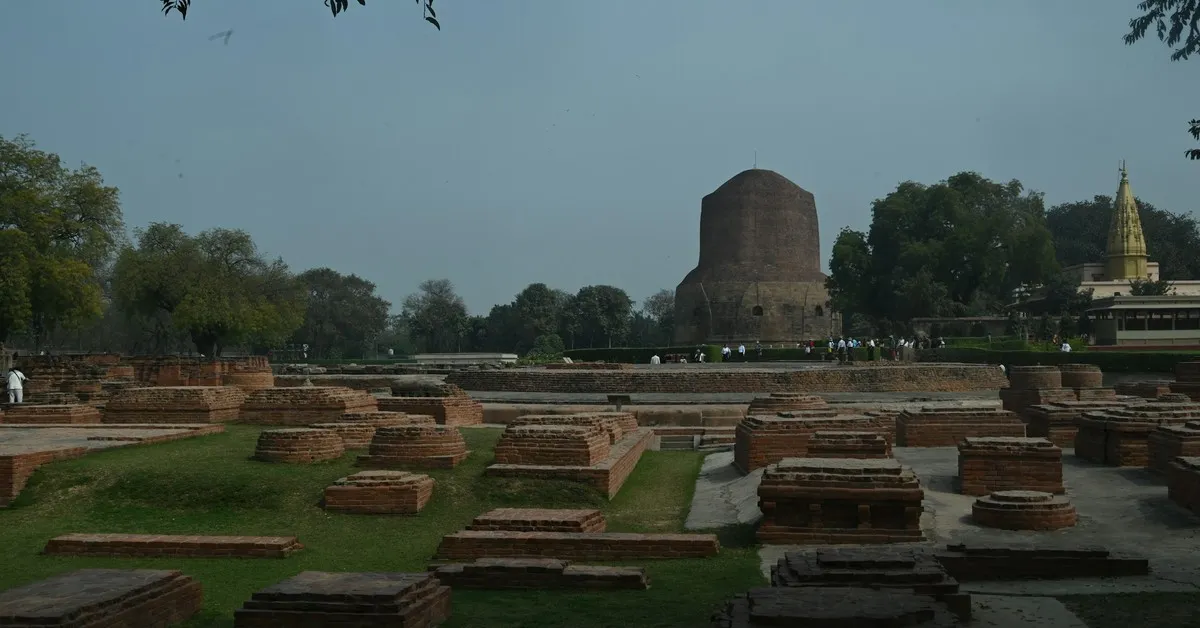
- The Archaeological Remains of Sarnath: The main park, with Dhamek Stupa, Dharmarajika Stupa, the Mulagandhakuti Vihara ruins and the base of the Ashoka Pillar.
Did anything change for visitors? Not yet. The UNESCO listing didn’t announce new timings, ticket prices or visitor limits. But a new UNESCO site usually means more visitors, so going early is smarter than ever.
For India’s other World Heritage Sites, see our guide to UNESCO World Heritage Sites in India.
How to Reach Sarnath From Varanasi
Sarnath is about 10 km north-east of Varanasi. The drive usually takes 25 to 45 minutes, depending on traffic.
| How to go | What to know |
|---|---|
| Auto-rickshaw | The cheapest private option. Fix the fare before you start, and decide if the driver will wait. |
| Taxi or cab | Best for families and older parents. Book a half-day trip with waiting time. |
| Shared auto | Very cheap, but slower and more crowded. Good for solo travellers. |
| Train | Sarnath has a small railway station, but road travel is easier for most visitors. |
From the airport: Varanasi’s airport is about 25 km from Sarnath, so you can even visit on your way in or out of the city.
Top Places to See in Sarnath
Most of Sarnath’s sights are close together, so you can walk between many of them.
Chaukhandi Stupa
This is your first stop, because it’s on the road into Sarnath. It marks the spot where the Buddha is believed to have met his five old companions after his enlightenment. The big brick mound has an octagonal tower on top, added much later by the Mughals. Visit it in the late afternoon if you can, when the bricks glow golden.
Dhamek Stupa
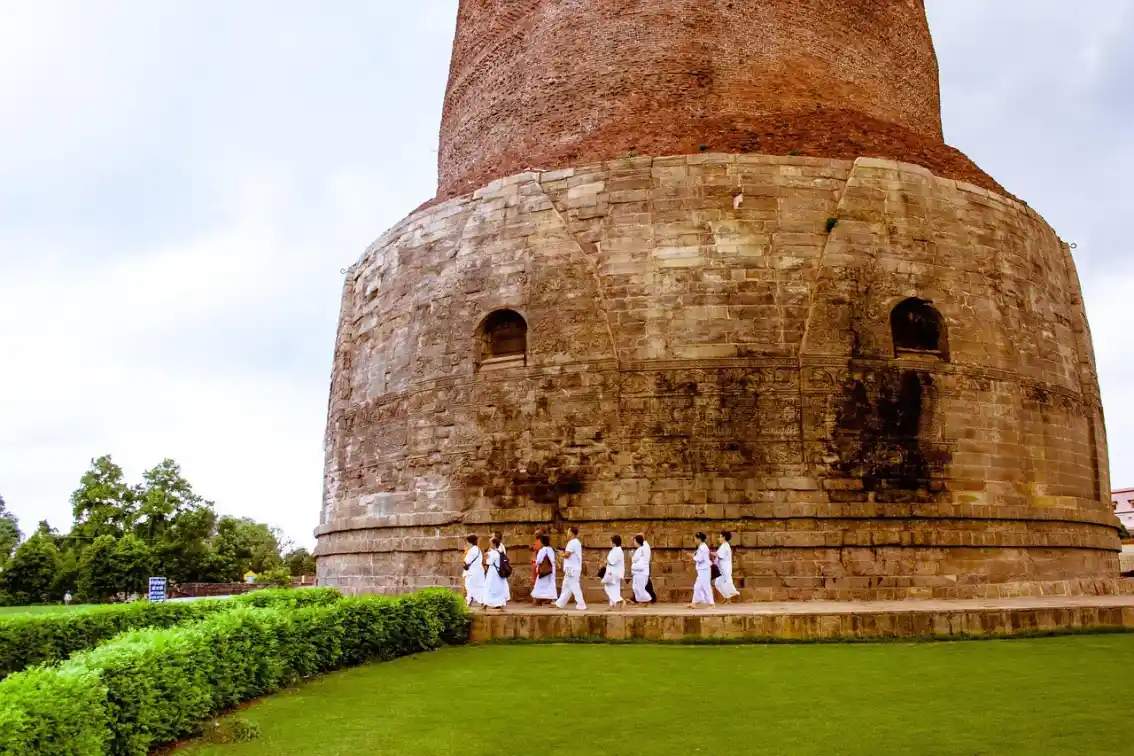
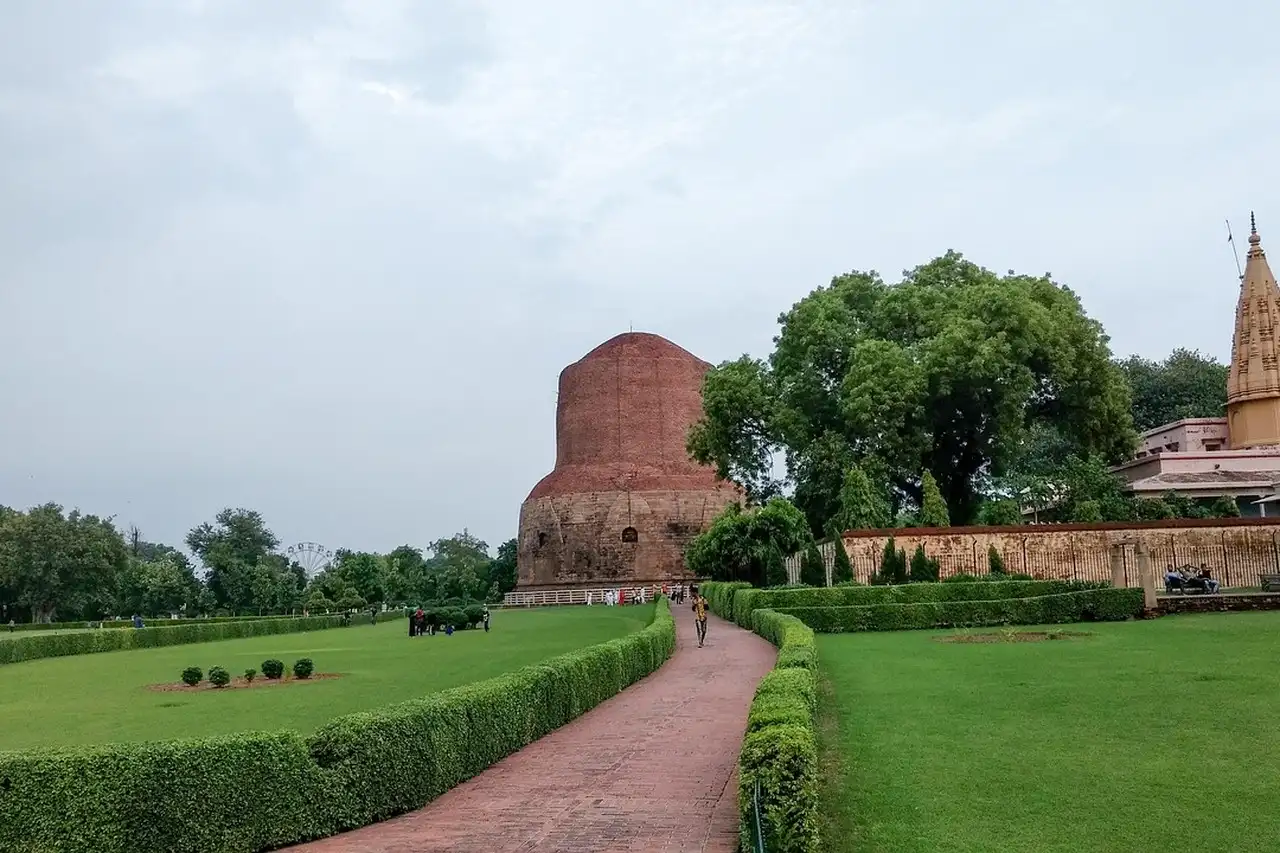
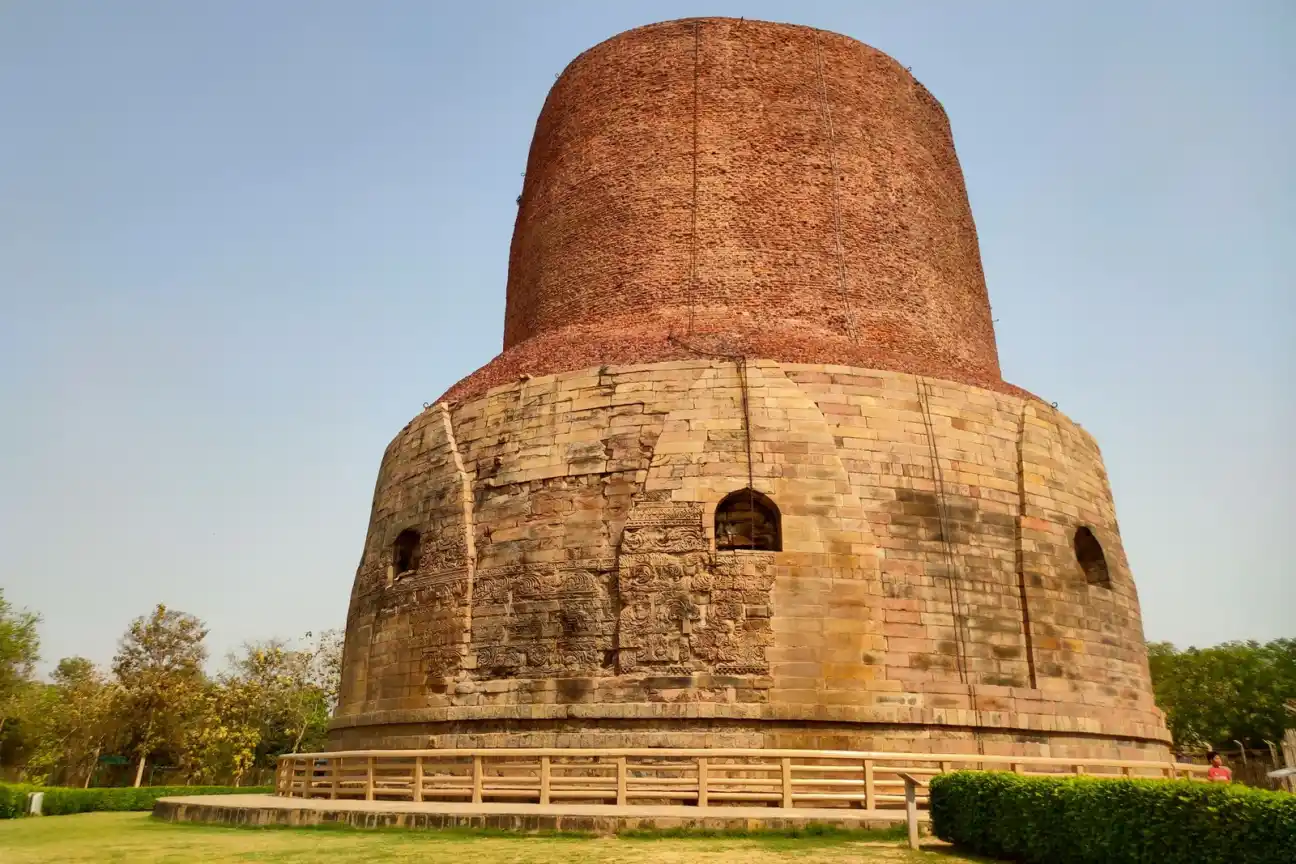
This is the heart of Sarnath. The huge, round Dhamek Stupa stands about 43 metres tall and marks the place of the Buddha’s first sermon. Walk around it slowly and look closely at the stone carvings of flowers and patterns near the bottom. You’ll often see monks sitting quietly in prayer beside it.
Dharmarajika Stupa and the Ashoka Pillar
Close to Dhamek Stupa, you’ll find the ruins of the Dharmarajika Stupa and the broken base of the Ashoka Pillar. Emperor Ashoka put up this pillar more than 2,000 years ago. Only the lower part is still standing here. The famous four-lion top is now kept safe in the museum.
Sarnath Archaeological Museum and the Lion Capital
Don’t skip this one. The museum’s star is the Lion Capital of Ashoka, four lions sitting back to back. India’s national emblem comes from this very sculpture. When you stand in front of it, you’ll suddenly recognise it from coins and notes. Kids love that moment.
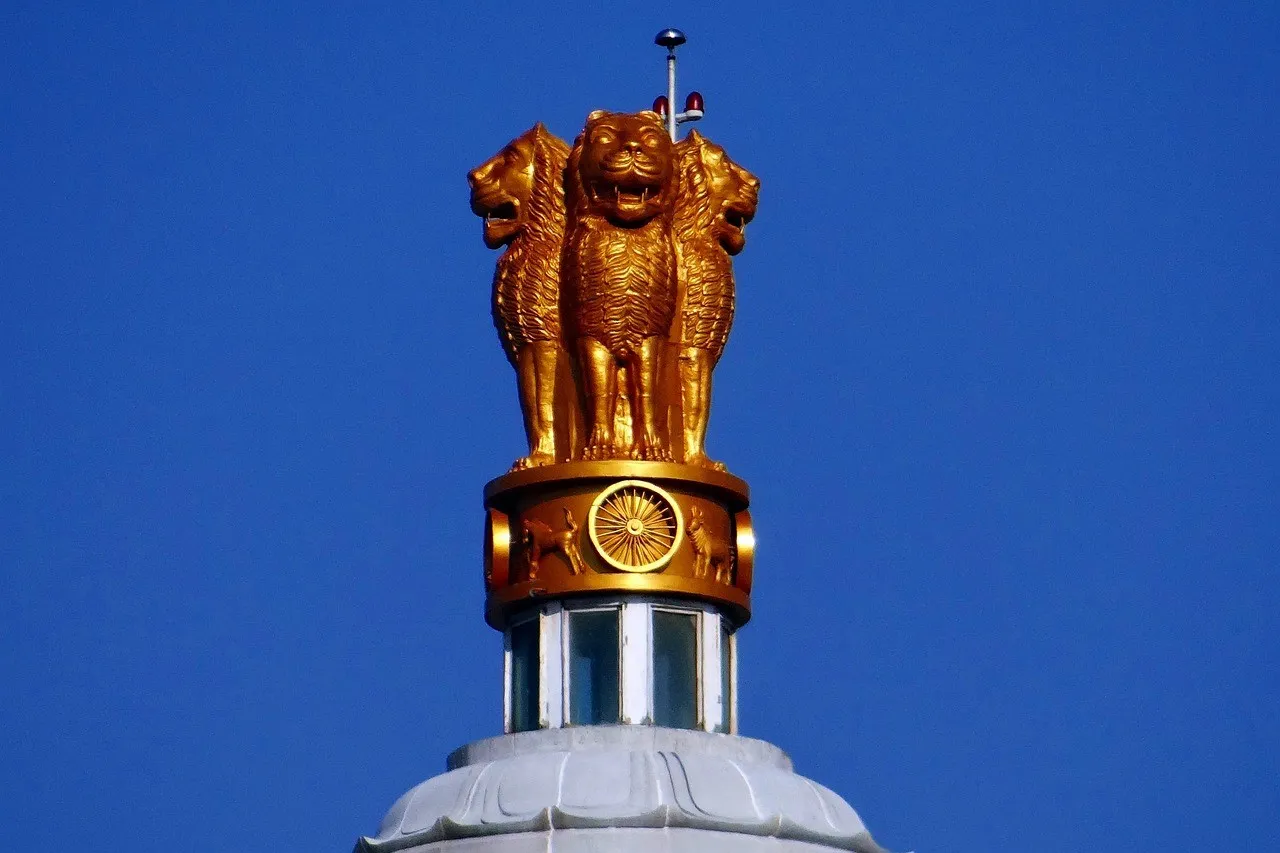
The museum also has beautiful old Buddha statues and other finds dug up at Sarnath.
Important: The museum is closed every Friday. If you visit on a Friday, you can still see the stupas and temples.
Mulagandha Kuti Vihar and the Bodhi Tree
This modern temple was built in 1931 by the Maha Bodhi Society. Inside, the walls are covered in paintings that tell the story of the Buddha’s life. Next to it grows a Bodhi tree, which came from a sapling of the sacred tree in Sri Lanka, itself grown from the tree at Bodh Gaya.
The Thai, Tibetan and Other Buddhist Temples
Buddhist countries have built their own temples in Sarnath. The Thai temple, with its giant standing Buddha statue in a quiet garden, is a favourite. The Tibetan temple has colourful prayer wheels you can turn. Entry to these temples is usually free.
Sarnath Timings and Ticket Prices
Timings and prices can change, so always check before you go. Here’s a simple guide.
| Place | Usual timings | Ticket (Indians) |
|---|---|---|
| Archaeological site (Dhamek Stupa area) | Daytime, roughly sunrise to sunset | A small ASI fee (children under 15 usually free) |
| Sarnath Museum | Around 9 or 10 am to 5 pm, closed on Fridays | Around ₹5 |
| Buddhist temples | Usually morning to evening | Usually free |
Foreign visitors pay higher ticket prices at ASI sites and the museum. You can often buy ASI tickets online or pay by UPI at the gate.
Easy Half-Day Sarnath Itinerary
| Time | Plan |
|---|---|
| 8:00 am | Leave Varanasi by auto or taxi |
| 8:40 am | Stop at Chaukhandi Stupa |
| 9:15 am | Explore Dhamek Stupa, the Ashoka Pillar and the ruins |
| 10:30 am | Visit the Sarnath Museum (not on Fridays) |
| 11:30 am | Mulagandha Kuti Vihar and the Bodhi tree |
| 12:15 pm | Thai and Tibetan temples |
| 1:00 pm | Lunch, then head back to Varanasi |
Want to stay longer? An evening light and sound show is held at the Dhamek Stupa. Check the show timings and tickets locally on the day.
Best Time to Visit Sarnath
- October to March: The best time. Days are cool and pleasant for walking.
- April to June: Very hot. Visit only early in the morning.
- July to September: Rainy and humid, but the gardens look fresh and green.
- Buddha Purnima (April or May): Sarnath is full of prayers, flowers and pilgrims. It’s beautiful, but expect big crowds.
Simple Tips for Visiting Sarnath
- Go early. Mornings are cooler and quieter, especially now that Sarnath is a UNESCO site.
- Dress modestly. It’s a holy place for many people. Cover your shoulders and knees.
- Take off your shoes before entering temples.
- Walk slowly and respectfully around the stupas. Many visitors are praying.
- Don’t climb on ruins. Stay on the paths and follow the barriers.
- Carry water and a cap. There’s a lot of walking in the open.
Frequently Asked Questions
How far is Sarnath from Varanasi?
Sarnath is about 10 km north-east of Varanasi. The drive usually takes 25 to 45 minutes by auto-rickshaw or taxi, depending on traffic. You can easily visit Sarnath as a half-day trip from Varanasi and still be back in the city for lunch or the evening Ganga Aarti.
Is Sarnath a UNESCO World Heritage Site?
Yes. Sarnath was added to the UNESCO World Heritage List on 25 July 2026, at the 48th session of the World Heritage Committee in Busan, South Korea. It became India’s 45th World Heritage Site. The listing covers Chaukhandi Stupa and the main archaeological remains, including Dhamek Stupa.
What is Sarnath famous for?
Sarnath is famous as the place where the Buddha gave his first teaching after his enlightenment. It’s also home to Dhamek Stupa and the Sarnath Museum, which holds the Lion Capital of Ashoka. India’s national emblem comes from this Lion Capital, so it’s special for every Indian visitor.
Is the Sarnath Museum open on Friday?
No, the Sarnath Archaeological Museum is closed every Friday. On other days, it’s usually open from around 9 or 10 am to 5 pm. If you can only visit on a Friday, you can still explore Dhamek Stupa, Chaukhandi Stupa and the Buddhist temples, which stay open.
How much time do you need in Sarnath?
You need about 3 to 4 hours to see Sarnath’s main sights comfortably. That covers Chaukhandi Stupa, Dhamek Stupa, the ruins, the museum and two or three temples. If you want to stay for the evening light and sound show, plan for most of the day.
What is the best time to visit Sarnath?
The best time to visit Sarnath is from October to March, when the weather is cool and pleasant for walking. Early mornings are the calmest time of day. Buddha Purnima in April or May is very special, but Sarnath gets crowded, so go early if you visit then.
Plan Your Sarnath Visit
Sarnath is small, quiet and only a short ride from busy Varanasi. But it holds one of the biggest stories in human history. Now that it’s a UNESCO World Heritage Site, more people than ever will come to see it.
Go early, walk slowly, and stand for a moment beside Dhamek Stupa. Listen to the birds and the soft chanting. It’s easy to see why, 2,500 years ago, the Buddha chose this peaceful place to share what he’d learned.