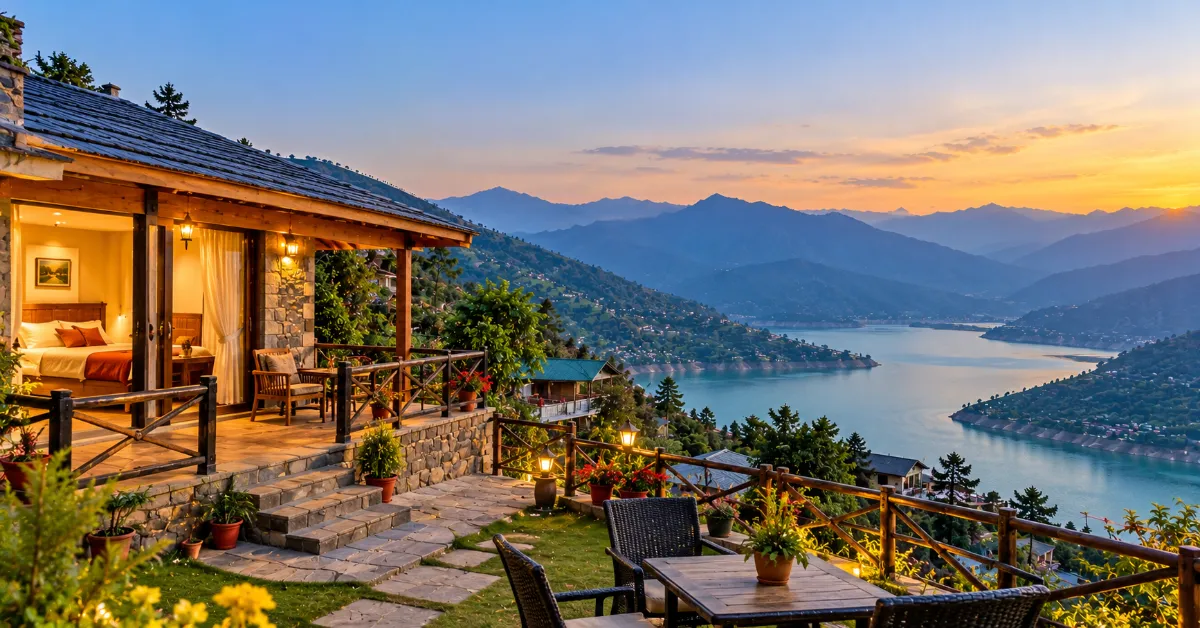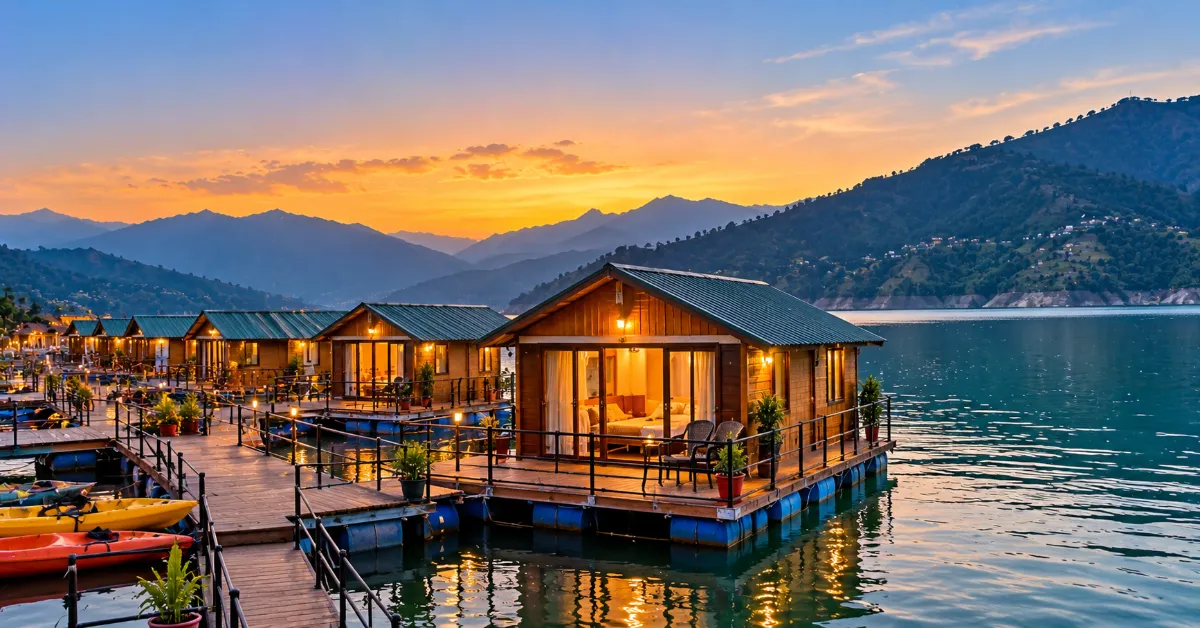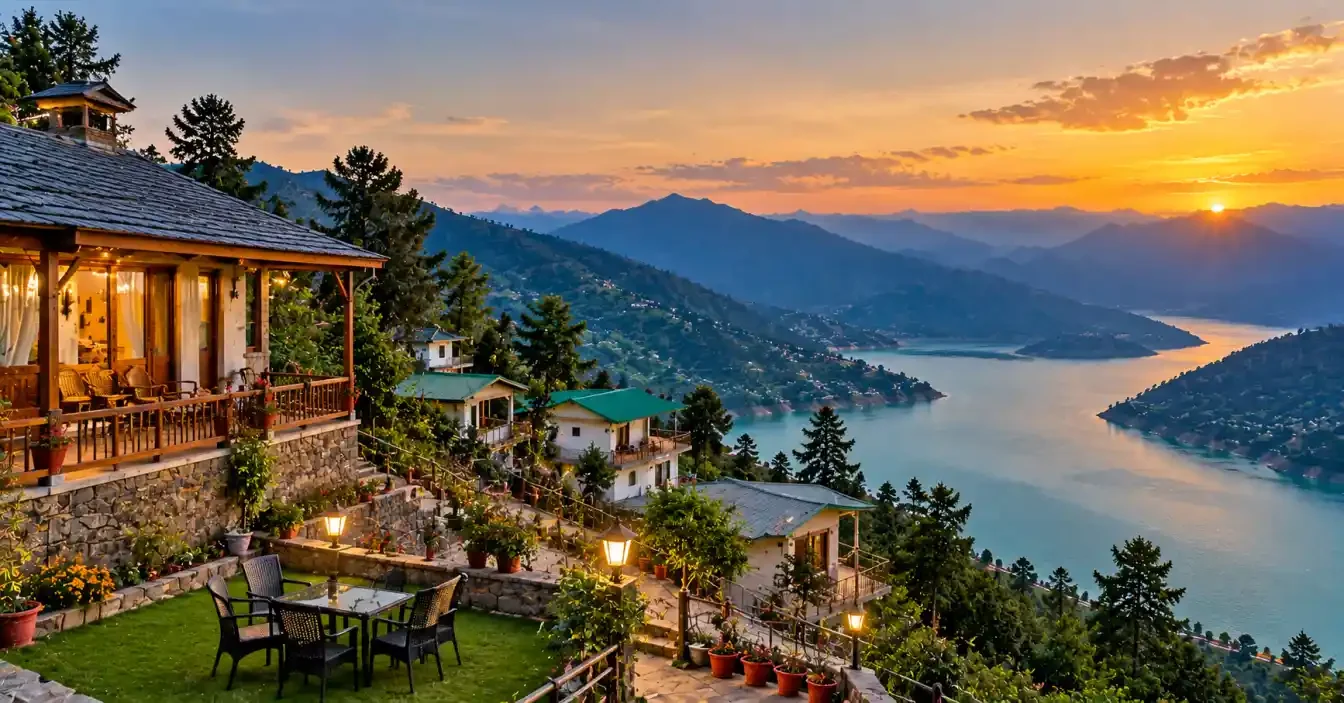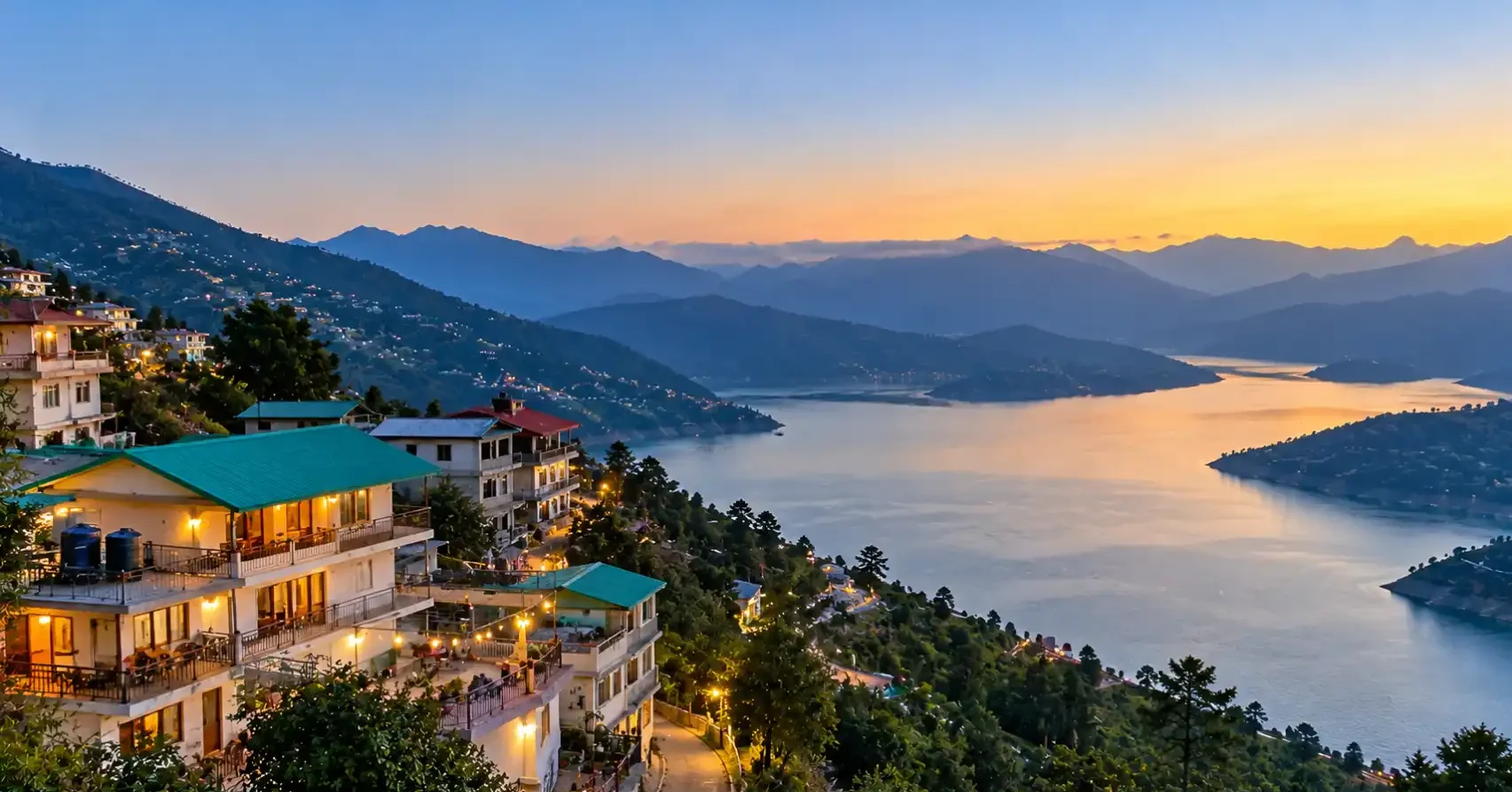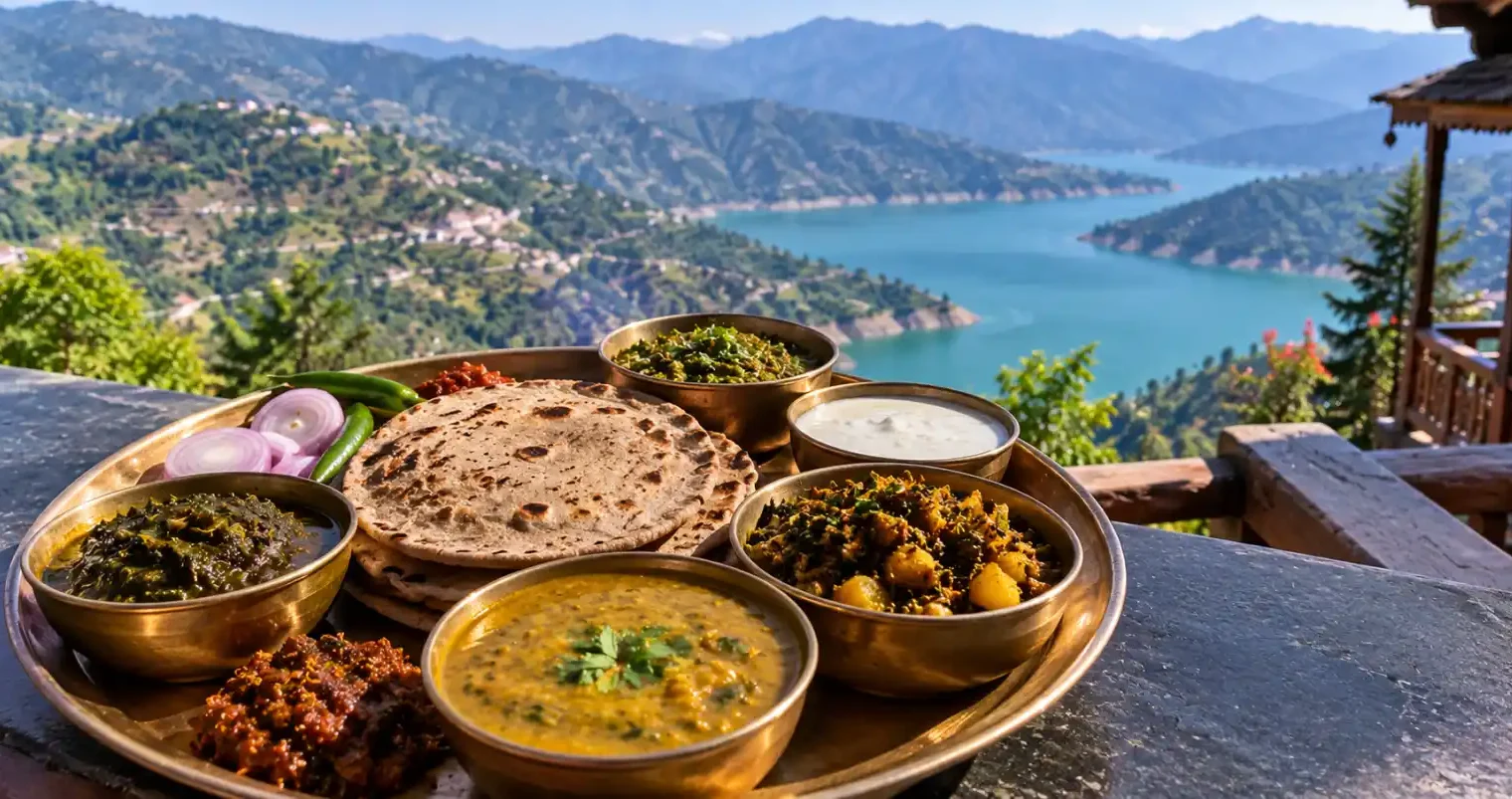
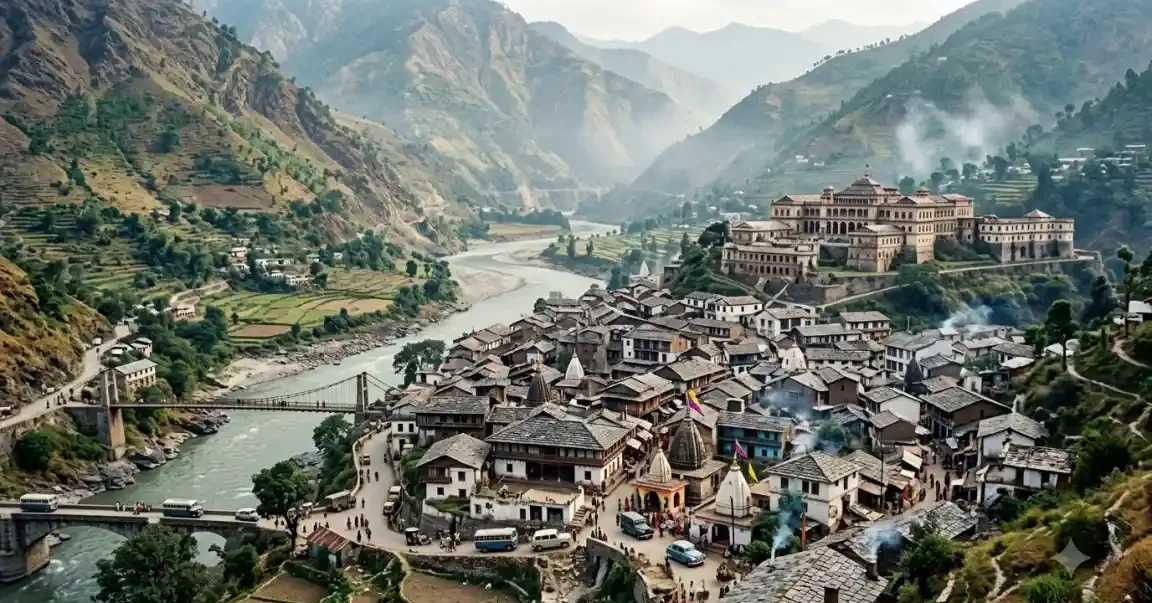
Ever stood at Tehri Lake and wondered what lies under all that water? A whole town does. Old Tehri, once the capital of a kingdom, now sits beneath the reservoir.
Old Tehri submerged in stages as the Tehri Dam reservoir filled, mostly between 2004 and 2006. Schools, temples, markets and a royal palace went under. Families moved uphill to New Tehri. This guide tells the story in simple words and shows what you can still see today.
You’ll read how the town began, why it was flooded, what happened to its people, how Old and New Tehri differ, and how to visit with respect.
What Was Old Tehri Like Before It Was Submerged?
Old Tehri was a busy hill town at the meeting point of the Bhagirathi and Bhilangana rivers. King Sudarshan Shah founded it in 1815 as the capital of the Tehri Garhwal kingdom, after the Gorkha rule ended. For nearly two centuries it served as the heart of the region.
It wasn’t a sleepy village. Garhwal Post describes schools, colleges, courts, cinema halls, a bus depot and places of worship for several faiths. That mix is what made the town special.
What Made the Town Special
- Royal capital: The old Raj Mahal and Rani Darbar stood here, built under Raja Sudarshan Shah.
- Clock tower: The Ghantaghar was built in 1887, according to Ganga Action, and stayed a landmark for generations.
- Mixed community: Hindus, Muslims, Sikhs and Christians lived side by side and shared festivals, says ETV Bharat.
- Tea stall debates: Locals say the town’s tea stalls were where politics and freedom movement talk happened.
- Freedom fighter: Sridev Suman, who opposed the monarchy, died after an 84 day hunger strike. Residents still remember him.
Why Was Old Tehri Submerged?
Old Tehri was submerged because the Tehri Dam on the Bhagirathi river created a huge reservoir above it. The 260.5 metre dam, the tallest in India, was completed in 2006. The old town sat right inside the lake’s footprint.
Reports differ on the exact year the water covered the town, with most placing it between 2004 and 2006. Construction itself began in the late 1970s. It was a long project, and people argued about it for decades.
The Two Sides of the Dam Story
- The purpose: The project aimed at hydropower, plus irrigation and drinking water for Uttar Pradesh and Delhi.
- The opposition: Environmentalist Sunderlal Bahuguna led the anti-dam movement for years, worried about people and the mountains.
- The earthquake worry: The dam sits in the Central Himalayan seismic gap. It’s designed for an 8.4 magnitude quake, though some experts want caution.
- The trade-off: Power and water came, but a historic town and its way of life were lost.
What Happened to the People of Old Tehri?
Most families were moved out between 2001 and 2004 and resettled mainly in New Tehri. Reports from the time say about 125 villages were fully or partly affected and over one lakh people were displaced. Exact counts vary by source.
Moving a town isn’t just moving houses. Neighbours who lived in the same lanes for generations ended up in different places. Some were offered land in Rishikesh and Haridwar, far from home.
How the Memory Lives On
- Complaints: Some oustees reported weak basics like drinking water in New Tehri, and many said compensation felt uneven.
- Annual remembrance: Former residents gather every 31 July to light lamps and share stories, as per ETV Bharat.
- Ek Thi Tehri: A replica of the old town was built in Dehradun in 2007 by Subodh Bahuguna, so younger people can see what was lost.
- Stories at home: Many families still describe their old street, shop or school to children who never saw it.
What Is the Difference Between Old Tehri and New Tehri?
Old Tehri was the historic river town founded in 1815 that now lies underwater. New Tehri is the planned town built on higher ground to resettle people, and it is today’s district headquarters. One is memory. The other is where you actually stay.
| Point | Old Tehri | New Tehri |
|---|---|---|
| Status | Submerged under Tehri Lake | Living town above the lake |
| Founded | 1815, by King Sudarshan Shah | Planned and built to resettle displaced families |
| Altitude | About 755 m | About 1,750 m |
| Role | Capital of the Tehri Garhwal kingdom | District headquarters |
| Population | Not reliably recorded | 24,014 in 2011 |
| Today | Ruins surface only when the lake is low | Dam views, markets, water sports base |
That height gap of roughly one kilometre explains why the new town sits so far above the lake. The altitudes come from Wikipedia and a travel account, so treat them as approximate.
Can You See Old Tehri Under the Water Today?
You can’t see the town itself, because it is underwater. But when the lake level falls, parts of the old Raj Mahal, the Rani Darbar and village remains have surfaced several times since 2006, as ETV Bharat reported in May 2023.
So don’t expect a ghost town view. Expect a lake, a few viewpoints and a lot of local stories. Honestly, the stories are the best part.
How to Visit With Respect
- Bhagirathipuram viewpoint: Stop on the way up to the dam for a wide view and a THDC information board.
- Koti Colony: It sits on the lake edge, and a travel account calls it the usual entry point for the old town area. The road from Chamba was rough, so ask about current conditions.
- Hire a local guide: Guides can point out where the old road, bus stand and helipad once stood.
- Stay safe: Never walk into the water or climb exposed ruins. Levels and mud can change fast.
- Be sensitive: For many locals this is loss, not a photo spot. Ask before photographing people.
Old Tehri Submerged: FAQs
When was Old Tehri submerged?
Old Tehri went under water in stages as the Tehri Dam reservoir filled, with most sources placing it between 2004 and 2006. The dam itself was completed in 2006. Exact dates vary by report, so the safest answer is a range.
Who founded Old Tehri?
King Sudarshan Shah founded Old Tehri in 1815. He made it the capital of the Tehri Garhwal kingdom after the Gorkha rule ended. The town stood at the confluence of the Bhagirathi and Bhilangana rivers.
Can you see Old Tehri under the water today?
No, the town is fully underwater. When the lake level drops, parts of the old palace and other remains have surfaced several times since 2006. You can also visit viewpoints like Bhagirathipuram and the Ek Thi Tehri replica in Dehradun.
What is the difference between New Tehri and Old Tehri?
Old Tehri was the historic river town founded in 1815 and is now submerged. New Tehri is the planned town built higher up, around 1,750 metres, to resettle families. It’s now the district headquarters and the base for visiting Tehri Lake.
How many people were displaced by the Tehri Dam?
Reports from the time say about 125 villages were fully or partly affected and over one lakh people were displaced. Figures differ across sources, and most families were resettled mainly in New Tehri.
Final Thoughts
The Old Tehri submerged story is about more than a dam. It’s about a kingdom’s capital, thousands of families and a way of life that now lives in memory. Knowing it makes your visit to Tehri Lake feel very different.
Visit with curiosity, listen to local voices and see the lake as both progress and loss. That’s the honest way to see Tehri.