
Planning a trip to Nainital and worried about getting altitude sickness? You may have heard that mountain destinations can cause headaches, nausea or breathing problems after you arrive.
The good news is that Nainital is not an extremely high-altitude destination. Uttarakhand Tourism lists the town at about 1,938 metres (6,358 feet) above sea level. That’s considerably lower than the elevations commonly associated with a higher risk of altitude illness.
Still, that doesn’t mean you should ignore how your body feels. Some travellers can feel uncomfortable when they move quickly from the plains to the hills, especially if they’re tired, dehydrated or not used to mountain travel. Here is what you need to know before your Nainital trip, including symptoms, acclimatization tips and when to take things seriously.
What Is the Nainital Height Above Sea Level?
Let’s start with the number people usually search for.
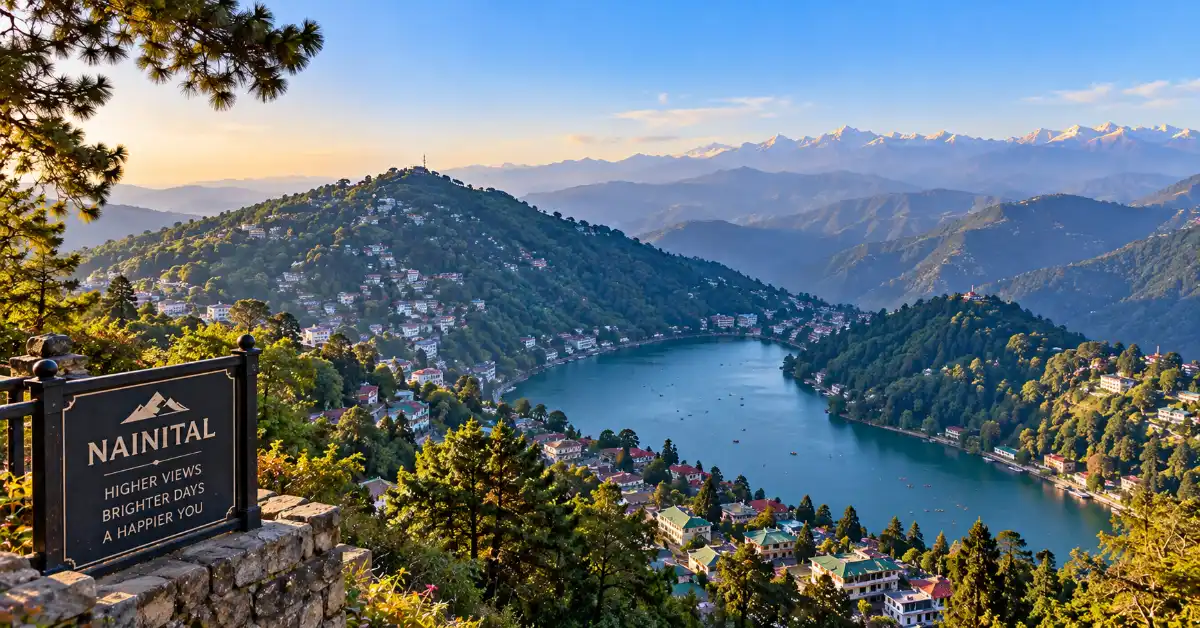
Nainital is around 1,938 metres above sea level, according to Uttarakhand Tourism. That’s roughly 6,358 feet. The town is built around Naini Lake in the Kumaon Himalayas, so you are definitely gaining elevation compared with cities in the plains.
But altitude isn’t just about whether a place is called a hill station. The amount of elevation you gain, how quickly you get there and how your body responds all matter. The CDC notes that altitude illness becomes a particular concern for travellers sleeping at elevations of around 2,450 metres (8,000 feet) and above, although illness can occasionally occur at lower elevations.
So, if you’re asking “Is Nainital safe at high altitude?”, the answer needs a little context. Nainital is elevated, but it is not in the same altitude category as destinations such as Leh or high Himalayan trekking routes.
Nainital altitude at a glance
- Nainital: about 1,938 m
- Approximate height in feet: 6,358 ft
- Naina Peak: 2,611 m
- Snow View: 2,270 m
- Nainital Zoo: around 2,100 m
The last three are attractions around the town, not the elevation of Nainital itself. For example, the Nainital district administration lists Naina Peak at 2,611 m and Snow View at 2,270 m.
Can You Actually Get Altitude Sickness in Nainital?
It’s possible to feel symptoms related to altitude after travelling to Nainital, but classic acute mountain sickness (AMS) is less expected at Nainital’s town elevation than it is at higher destinations.
The CDC says any traveller sleeping at or above about 2,450 m can be at risk, and sometimes symptoms occur at lower elevations. It also explains that individual susceptibility varies, so there isn’t a simple altitude number that guarantees that everyone will feel fine.
This distinction matters.
If you reach Nainital and develop a headache or feel tired, don’t immediately assume you’ve developed altitude sickness. Travel itself can leave you exhausted. A long road journey, lack of sleep, dehydration, skipping meals or simply being uncomfortable in cold weather can also make you feel unwell.
The important thing is to watch the combination of symptoms and how they change over time, rather than panic over one headache.
What Does Altitude Sickness Feel Like?
Mild acute mountain sickness usually involves symptoms such as headache, tiredness, loss of appetite, nausea or vomiting. The CDC notes that symptoms commonly begin within a few hours after arriving at altitude or after ascending further.
That can make things confusing during a Nainital holiday. Imagine you’ve spent six hours travelling, reached your hotel in the evening, skipped lunch and immediately gone sightseeing. You develop a headache at night.
Is it altitude?
Maybe. But it could also simply be exhaustion or dehydration.
Common symptoms to watch for
- Headache
- Unusual tiredness
- Dizziness
- Nausea or loss of appetite
- Vomiting
- Difficulty sleeping
Don’t treat this list as a diagnosis. If symptoms are severe, getting worse or accompanied by serious breathing or neurological symptoms, you need medical attention rather than trying to push through the trip.
Why Do Some People Feel Unwell After Reaching Nainital?
Your body has to adjust whenever you move to a higher elevation. At higher altitudes, air pressure is lower and less oxygen is available with each breath. How strongly someone reacts depends partly on the altitude and how quickly they ascend.
But there’s another part of mountain travel that people often overlook.
The journey itself.
A long drive from the plains can mean hours of sitting, irregular meals and not drinking enough water. Then you arrive in cooler weather and immediately start walking around Mall Road or climbing slopes to your hotel.
Your body may simply be saying, “Can we slow down for a minute?”
That’s why the first evening in Nainital doesn’t need to become a sightseeing marathon.
How Long Does It Take to Acclimatize in Nainital?
Acclimatization means allowing your body time to adjust to lower oxygen availability as you move higher.
At genuinely high altitudes, gradual ascent and acclimatization are important. The CDC says the acute acclimatization process is especially important during the first 3–5 days after ascent to high altitude.
For a normal Nainital holiday, you generally aren’t dealing with the same acclimatization challenge as someone travelling directly to a much higher Himalayan destination. Still, taking your first day slowly is a sensible travel habit, particularly if you’re coming directly from the plains or travelling with children, older adults or someone with an existing medical condition.
Simple acclimatization tips for a Nainital trip
- Take it easy for the first few hours after arrival.
- Drink water regularly and don’t skip meals.
- Avoid jumping straight into strenuous activities.
- Get enough sleep after reaching the town.
- Pay attention to how your body feels before going to higher viewpoints.
- Don’t continue ascending if you are developing altitude-illness symptoms.
The goal isn’t to spend your holiday worrying about altitude. It’s simply to give your body some time to settle in.
Does Nainital’s Altitude Affect Breathing?
Some people may notice that breathing feels different when travelling to the hills, particularly during physical activity. But shortness of breath should not automatically be blamed on altitude sickness.
The CDC lists shortness of breath, weakness and cough among symptoms associated with high-altitude pulmonary edema (HAPE), a serious form of altitude illness. Those symptoms require urgent medical attention and descent to a lower elevation.
So there’s an important difference between getting slightly winded after walking uphill and experiencing unexplained or worsening breathing difficulty while resting.
If someone is struggling to breathe, don’t wait around hoping it will pass.
Is Nainital Safe at High Altitude for Older Adults?
For many older travellers, Nainital’s elevation is manageable, but age alone doesn’t tell you whether someone will tolerate altitude comfortably.
What matters more is the person’s health, previous experience with altitude and any existing heart or lung conditions. The CDC specifically advises people with pre-existing heart or lung disease to discuss high-altitude travel with a doctor familiar with altitude medicine.
This is especially relevant if you’re planning a Nainital trip with elderly parents. Don’t focus only on altitude. Consider walking, slopes, cold weather, sleep and the overall pace of the itinerary too.
A relaxed trip is often much more comfortable than trying to cover every viewpoint in one day.
What About Children Travelling to Nainital?
Children can also experience altitude illness. The CDC notes that children are susceptible to altitude illness similarly to adults, although symptoms can sometimes be harder to recognize in younger children who cannot clearly describe how they feel.
If you’re travelling with children, watch for changes in behaviour as well as physical symptoms.
A child who suddenly becomes unusually tired, loses appetite, complains of a headache or seems unwell deserves attention. Don’t force them to continue sightseeing simply because the itinerary says there’s another place to visit.
Honestly, the mountain will still be there tomorrow.
What Should You Do If You Get a Headache in Nainital?
Don’t panic.
First, stop sightseeing and rest. Think about the obvious things too. Have you eaten? Have you been drinking enough water? Did you sleep properly? Have you been travelling all day?
If symptoms are mild but you suspect altitude illness, do not continue ascending while you have symptoms. The CDC advises travellers not to ascend to a higher sleeping altitude while experiencing altitude-illness symptoms and to descend if symptoms become worse despite resting at the same elevation.
If symptoms are severe or getting worse, seek medical care rather than trying home remedies or simply waiting it out.
When should you take symptoms seriously?
Get urgent medical help if someone develops signs such as:
- Severe or worsening shortness of breath
- Confusion or unusual drowsiness
- Loss of coordination
- Difficulty walking normally
- Severe weakness
- Breathing problems while resting
- A worsening condition despite rest
Serious altitude illnesses such as HACE and HAPE are medical emergencies. Descent and appropriate medical treatment are important.
Can You Visit Higher Places Around Nainital?
This is where your itinerary matters.
Nainital town is around 1,938 m, but some popular attractions are higher. Naina Peak is listed at 2,611 m, while Snow View is around 2,270 m.
That doesn’t mean you need to avoid these places automatically. It simply means you should understand that altitude can increase as you move around the region.
For example, Snow View is described by the Nainital district administration as an easily accessible hilltop and can be reached by ropeway or motorable road.
Naina Peak is a different proposition. The district administration describes it as the highest peak in Nainital town, with access involving trekking or horses from certain points.
So for a relaxed family trip, choose activities based on how your body feels, not simply how many places you can tick off.
7 Simple Ways to Make Your Nainital Trip More Comfortable
You don’t need a complicated altitude-sickness plan for an ordinary Nainital holiday. A few sensible habits can make the trip easier.
1. Don’t rush after arrival
Reach your hotel, settle in and rest before starting sightseeing.
2. Stay hydrated
Carry water during your journey and sightseeing. Don’t wait until you’re extremely thirsty.
3. Eat normally
Long journeys often lead to skipped meals. Try to keep meals regular.
4. Keep the first day light
A relaxed walk near the lake is very different from climbing several viewpoints on arrival day.
5. Avoid strenuous activity if you feel unwell
If you develop symptoms that could be related to altitude, don’t push yourself to continue climbing.
6. Be careful with alcohol
The CDC advises avoiding alcohol during the initial period after reaching higher elevations, particularly above 8,000 feet.
7. Talk to your doctor if you have a medical condition
If you have a significant heart or lung condition or another health issue that could affect high-altitude travel, get individual medical advice before the trip.
Is Nainital Safe at High Altitude?
Nainital is an elevated hill station, but it is not generally considered an extreme high-altitude destination. At around 1,938 m, it is below the 2,450 m threshold the CDC uses when describing the altitude at which unacclimatized travellers can be at risk for altitude illness. However, the CDC also notes that illness can sometimes occur at lower elevations and that individual responses vary.
So the sensible answer isn’t simply “Nainital cannot cause altitude sickness.”
It is more accurate to say that serious altitude illness is much less of a concern in Nainital than at much higher Himalayan destinations, but you should still listen to your body and take symptoms seriously.
That’s a much better way to look at mountain travel.
Frequently Asked Questions About Nainital Altitude Sickness
Is Nainital at a high altitude?
Nainital is located at approximately 1,938 metres (6,358 feet) above sea level according to Uttarakhand Tourism. It is a hill station, but its elevation is lower than many destinations commonly associated with significant altitude illness.
Can Nainital cause altitude sickness?
Altitude sickness is less expected at Nainital’s town elevation than at higher-altitude destinations, but some people can experience altitude-related symptoms at lower elevations. Individual susceptibility varies.
What are the symptoms of altitude sickness in Nainital?
Possible symptoms include headache, tiredness, dizziness, loss of appetite, nausea and vomiting. More serious symptoms such as confusion, loss of coordination or breathing difficulty require urgent medical attention.
How can I prevent altitude sickness on a Nainital trip?
Take the first part of your trip slowly, stay hydrated, eat normally, avoid strenuous activity if you feel unwell and don’t continue ascending if you develop symptoms that could indicate altitude illness.
Is Nainital safe for elderly people?
Many older travellers can visit Nainital comfortably, but individual health matters. People with heart or lung conditions should discuss high-altitude travel with their doctor before travelling.
Is Nainital safe for children?
Children can travel to Nainital, but they can also experience altitude illness. Younger children may not be able to clearly describe their symptoms, so parents should watch for unusual tiredness, headache, loss of appetite or changes in behaviour.
Is Nainital higher than Mussoorie?
The two destinations are at similar hill-station elevations, but the exact altitude varies depending on the point being measured. For Nainital, Uttarakhand Tourism lists the town at approximately 1,938 metres above sea level.
Do I need medicine for altitude sickness in Nainital?
Don’t self-prescribe altitude-sickness medication simply because you are visiting Nainital. Medication decisions depend on the traveller, itinerary and medical history. If you have concerns about altitude illness or an abrupt ascent, discuss them with a qualified doctor before travelling. The CDC recommends medical advice for travellers with relevant medical conditions and discusses preventive medicines for higher-altitude travel.
Final Thoughts
So, does Nainital cause altitude sickness?
For most ordinary visitors, Nainital’s elevation is not in the same range as the much higher Himalayan destinations where altitude illness becomes a major travel concern. The town sits at about 1,938 metres, while the CDC identifies 2,450 metres and above as the point where unacclimatized travellers are generally considered at risk, although symptoms can sometimes occur lower.
The best approach is pretty simple.
Don’t arrive and immediately try to conquer the entire town. Rest. Eat. Drink water. Let your body settle. And if you genuinely feel unwell, don’t ignore it just because you’ve already paid for the hotel or planned the day’s sightseeing.
A mountain trip should feel refreshing, not like a race against your itinerary.